
I am a multi-disciplinary designer and artist.
Through my practice I’m exploring human behaviour, personal identity and interrelationship between design and art.
My main interest in the past years lies in materiality and use of different material as a communication method as well as exploration of printed matter and printing methods.
I find mesmerizing the process of crafting, building and creating, so often my work translates into objects and installations.
I would like to call myself an author.
Paper: Virgin Pulp
Paper:
Cover: Linen
Binding method: Coptic stitch
Printed: ArtEZ University of
the Arts, Arnhem
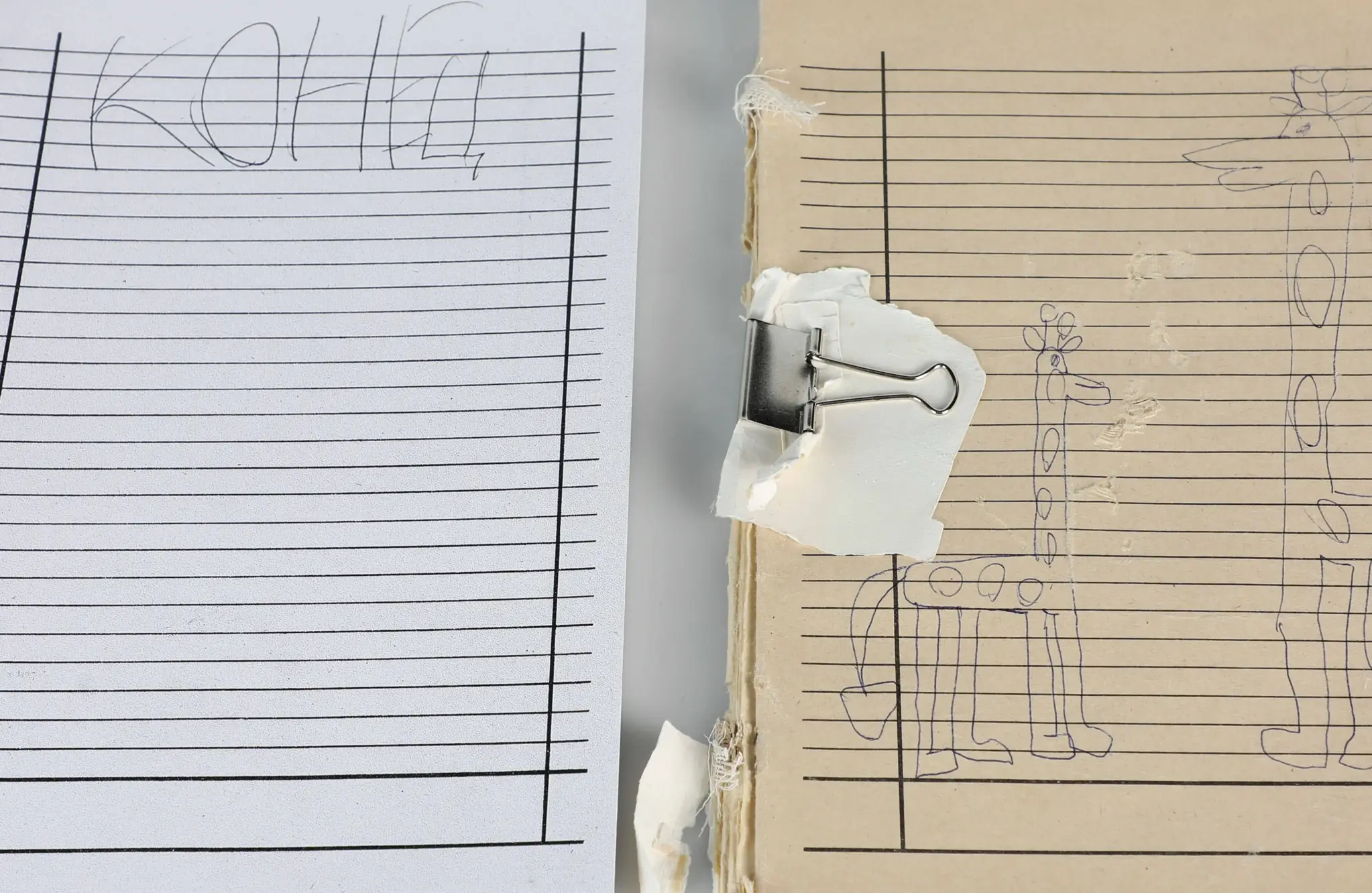
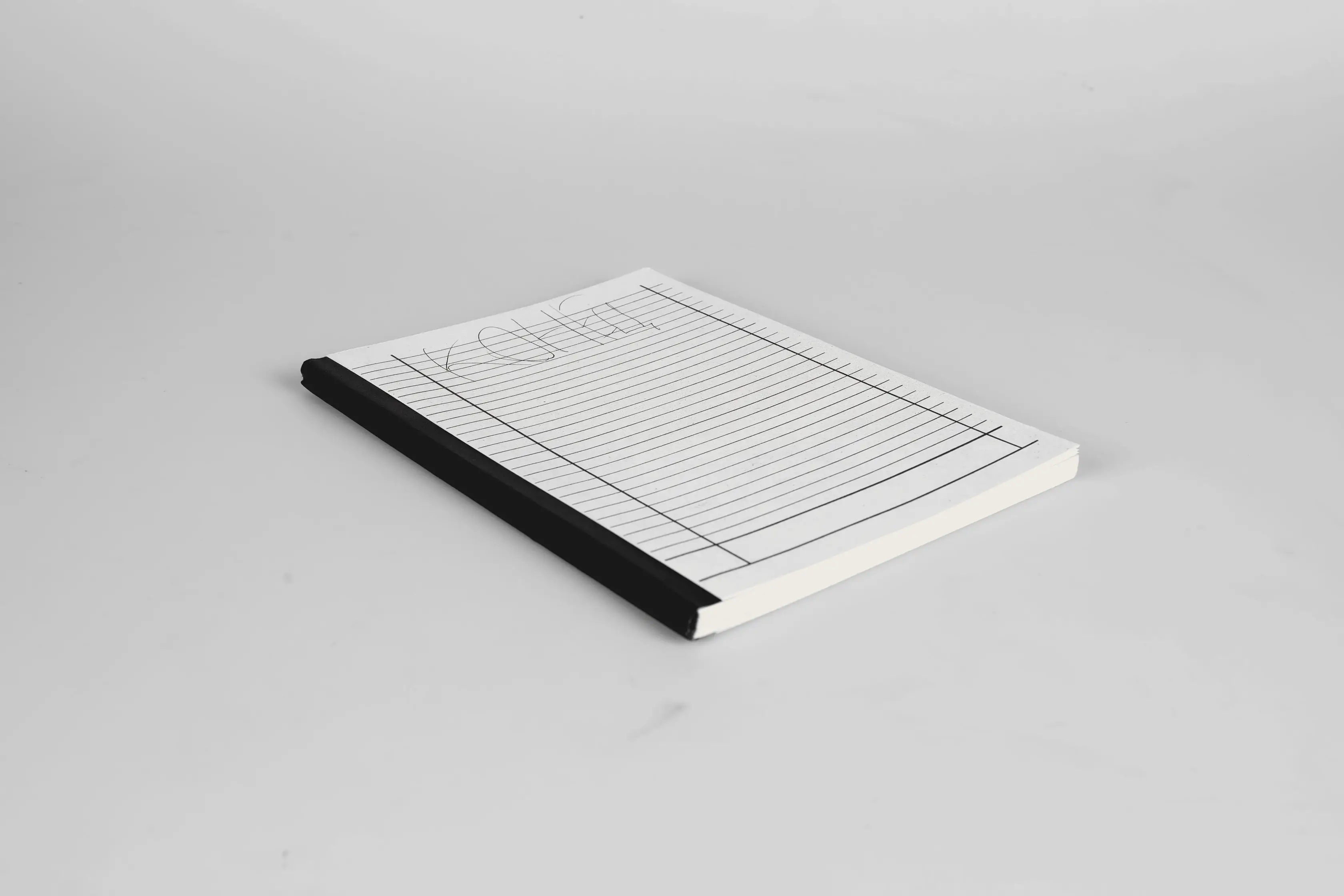
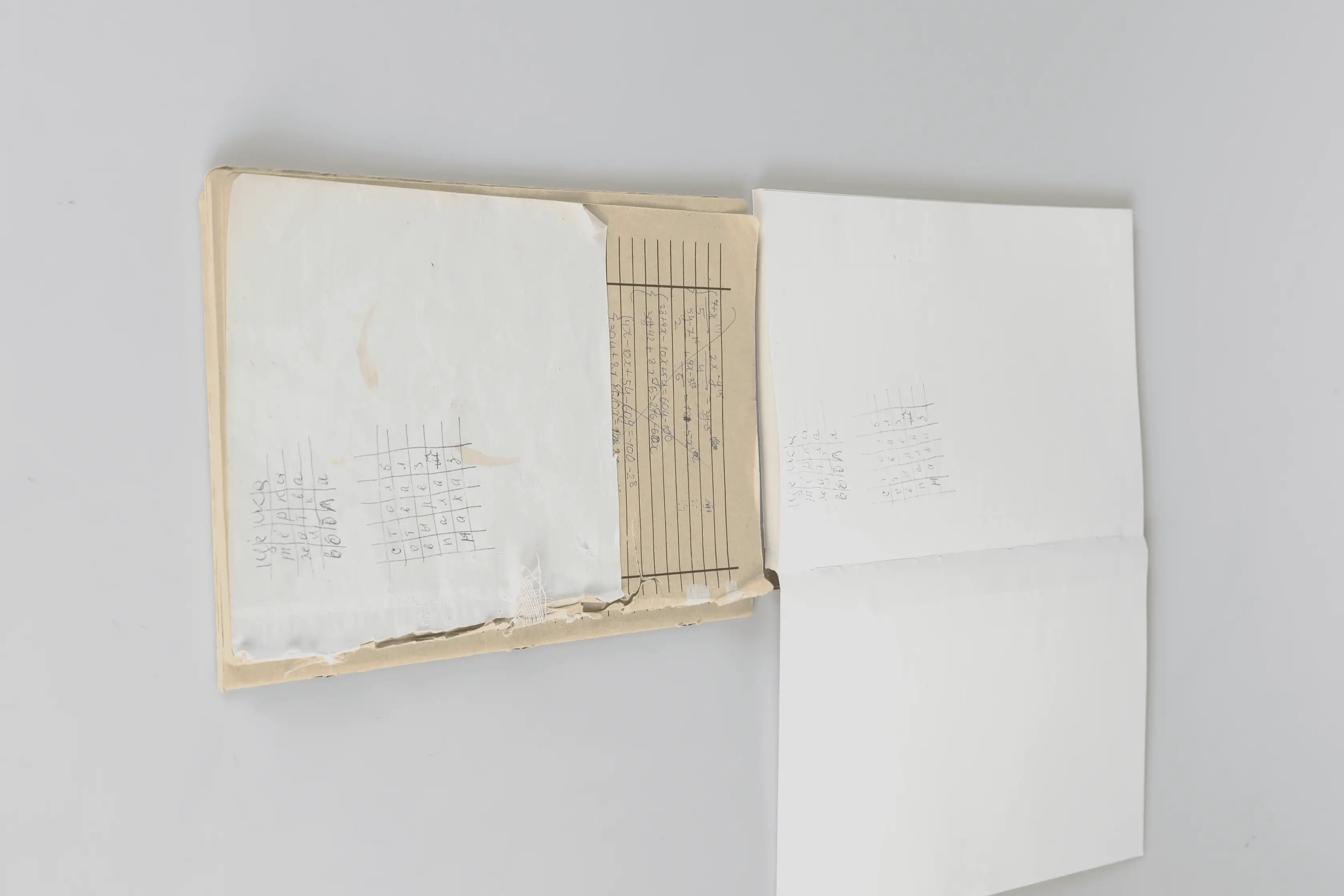
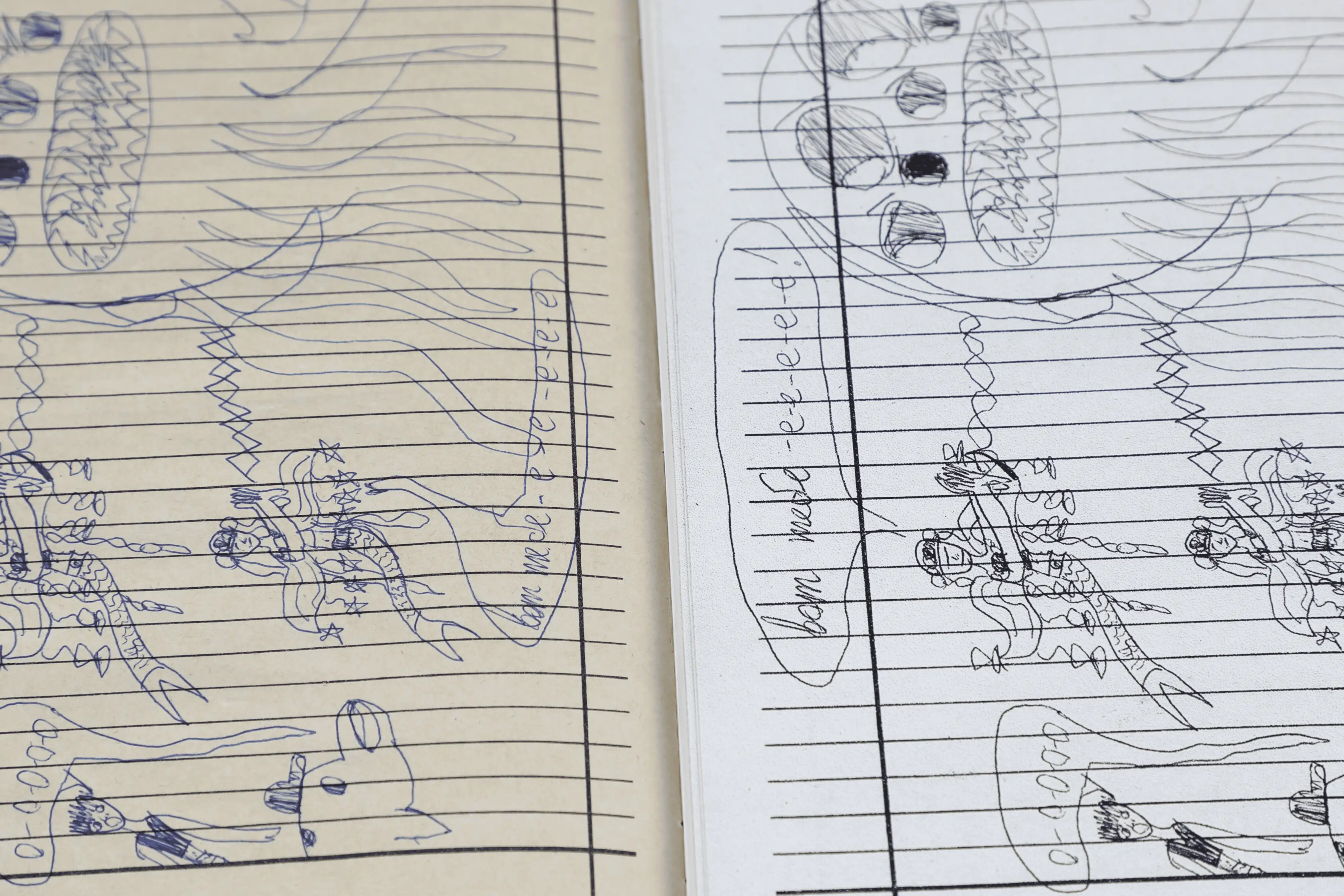
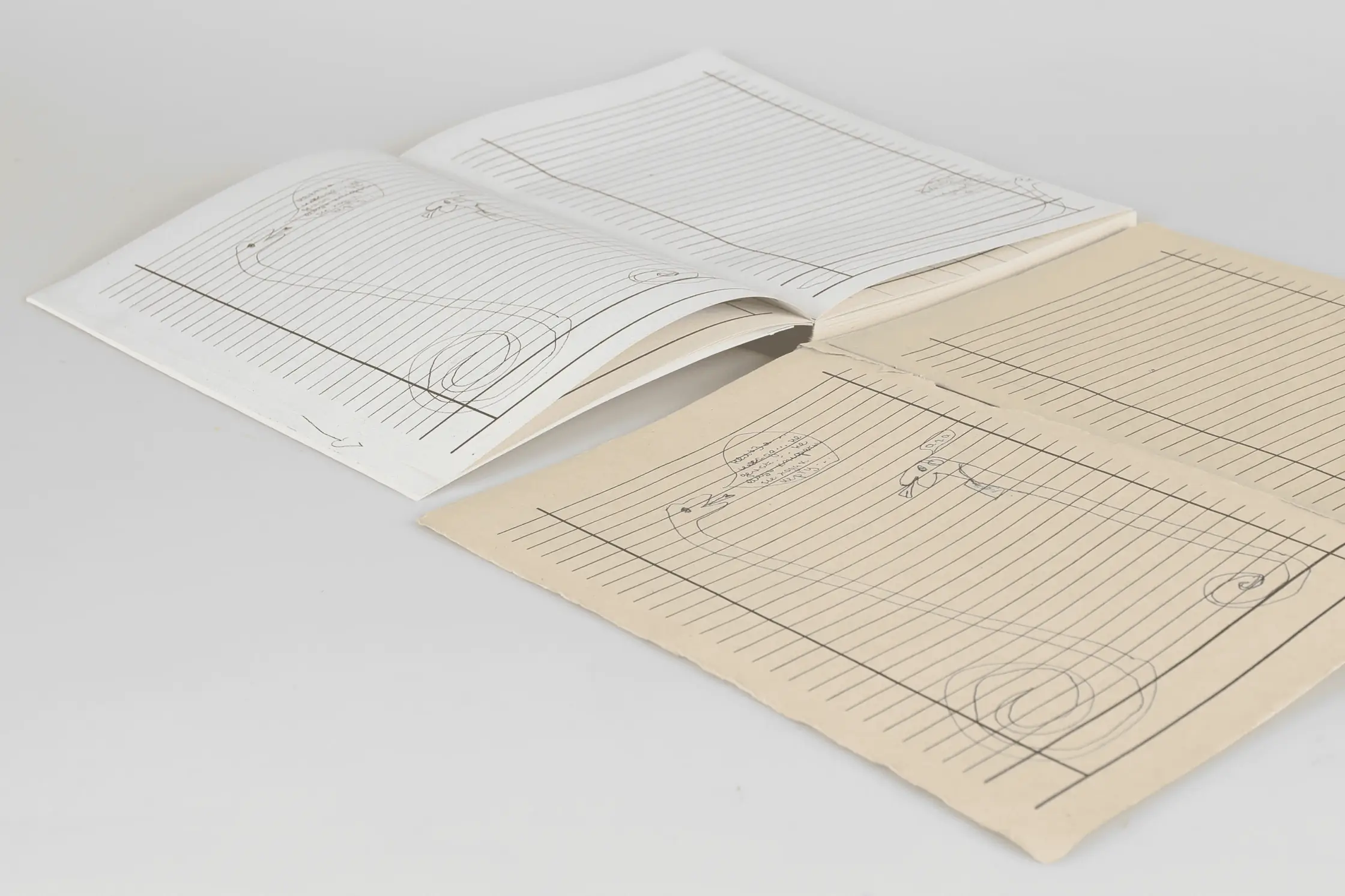
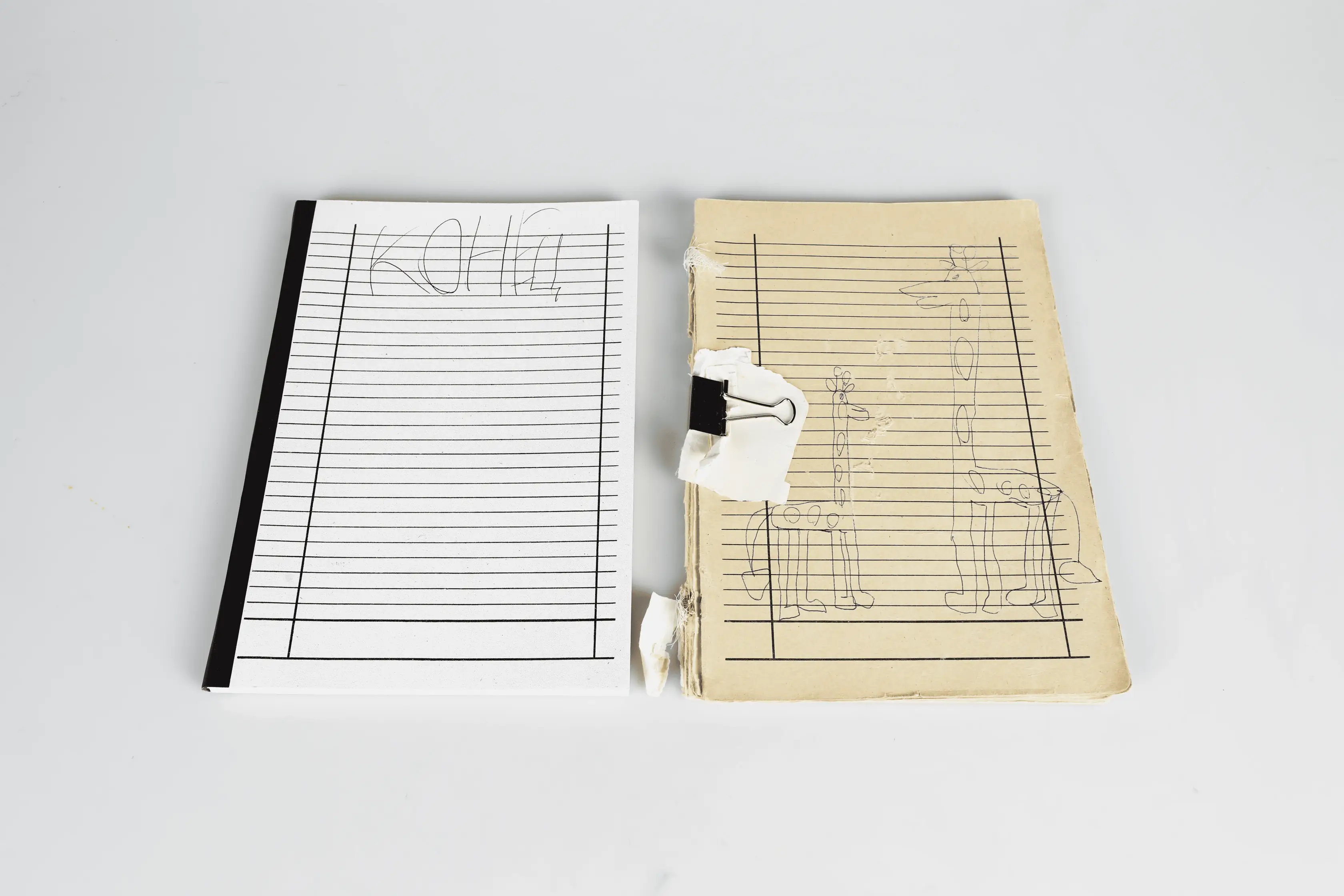
КОНЕЦ. (The End.)
Project began by exploring the overlooked and in-between spaces of the ArtEZ University of the Arts Rietveld building, with a focus on staircases and the unused areas beneath them. These spaces reminded the artist of how, in many homes, the area under the stairs becomes a storage place for forgotten or unused objects.
This connection led to collecting information and conversations with other people on the topic, which later transformed this project shape and focus.
The research took an unexpected turn when, during one of the conversations, old childhood drawing notebooks, stored under the stairs in a family home, were rediscovered. Instead of focusing on the forgotten things of others, the work shifted toward the act of remembering something deeply personal that had almost been lost, resulting in a complete facsimile of one of the notebooks, reconstructed through scanning, editing, printing, and re-binding.
This work links architectural neglect with personal memory, showing how forgotten spaces can unexpectedly lead back to forgotten parts of ourselves.
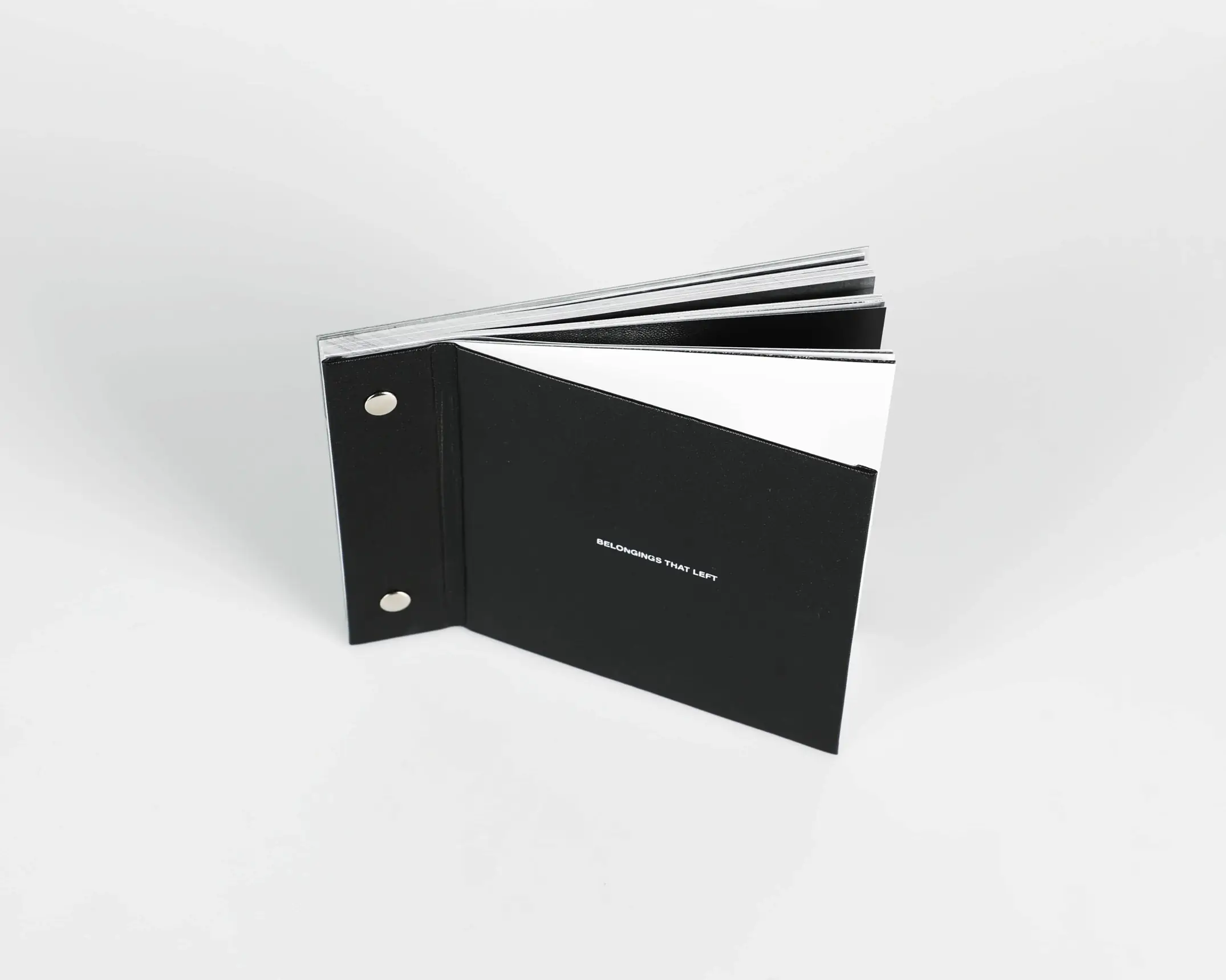
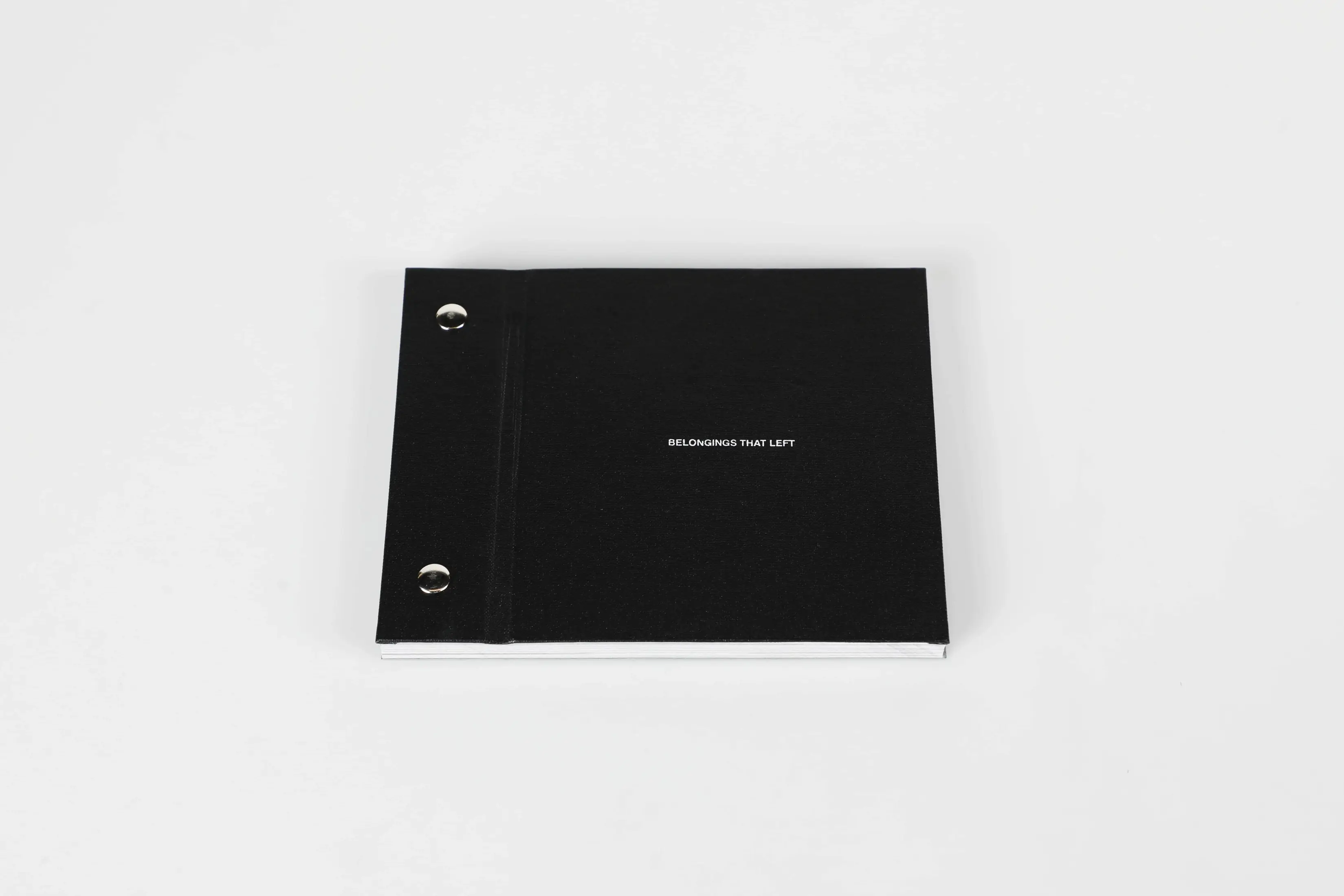
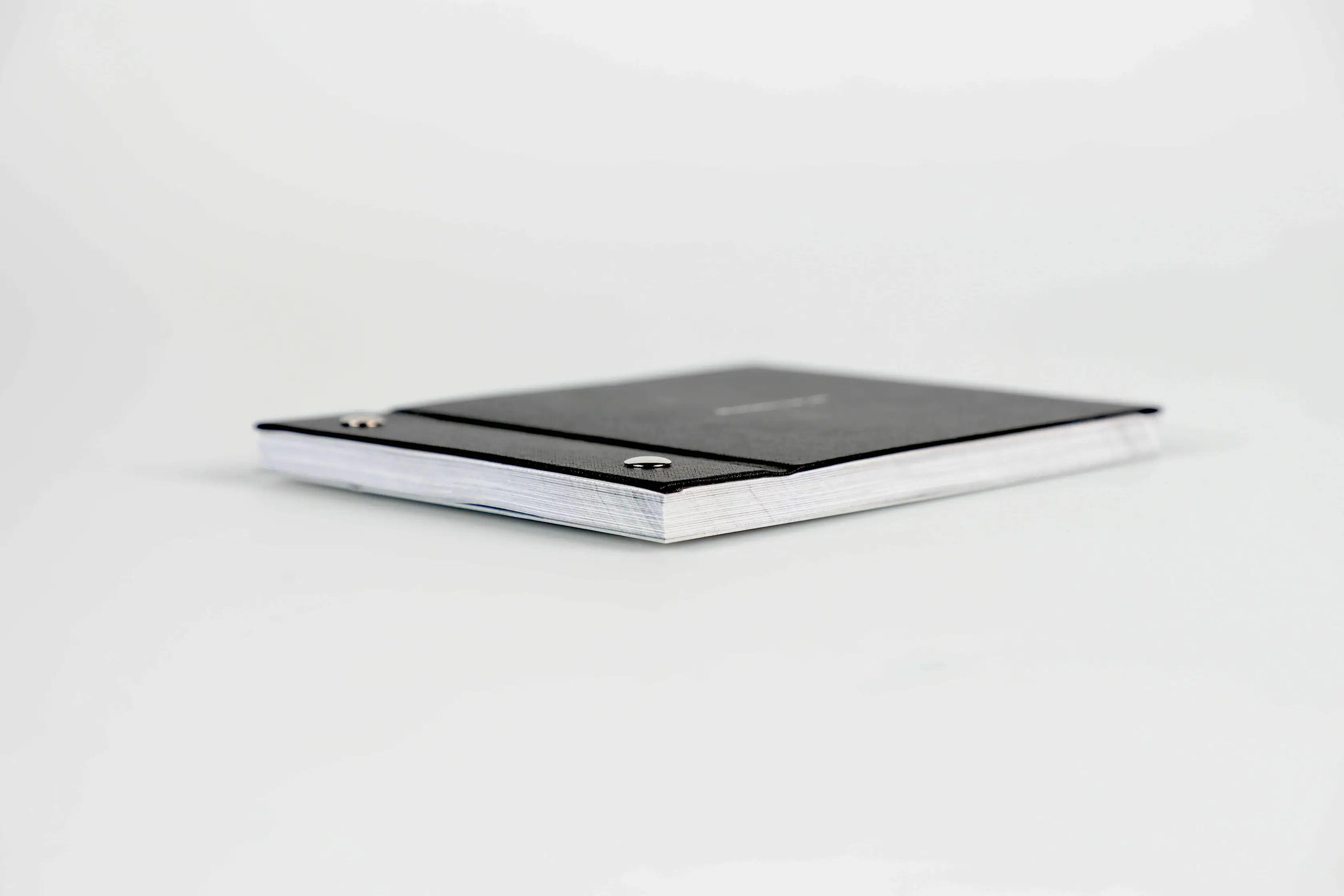
Paper: Virgin Pulp
Cover: Linen on cardboard, Silkscreen printing
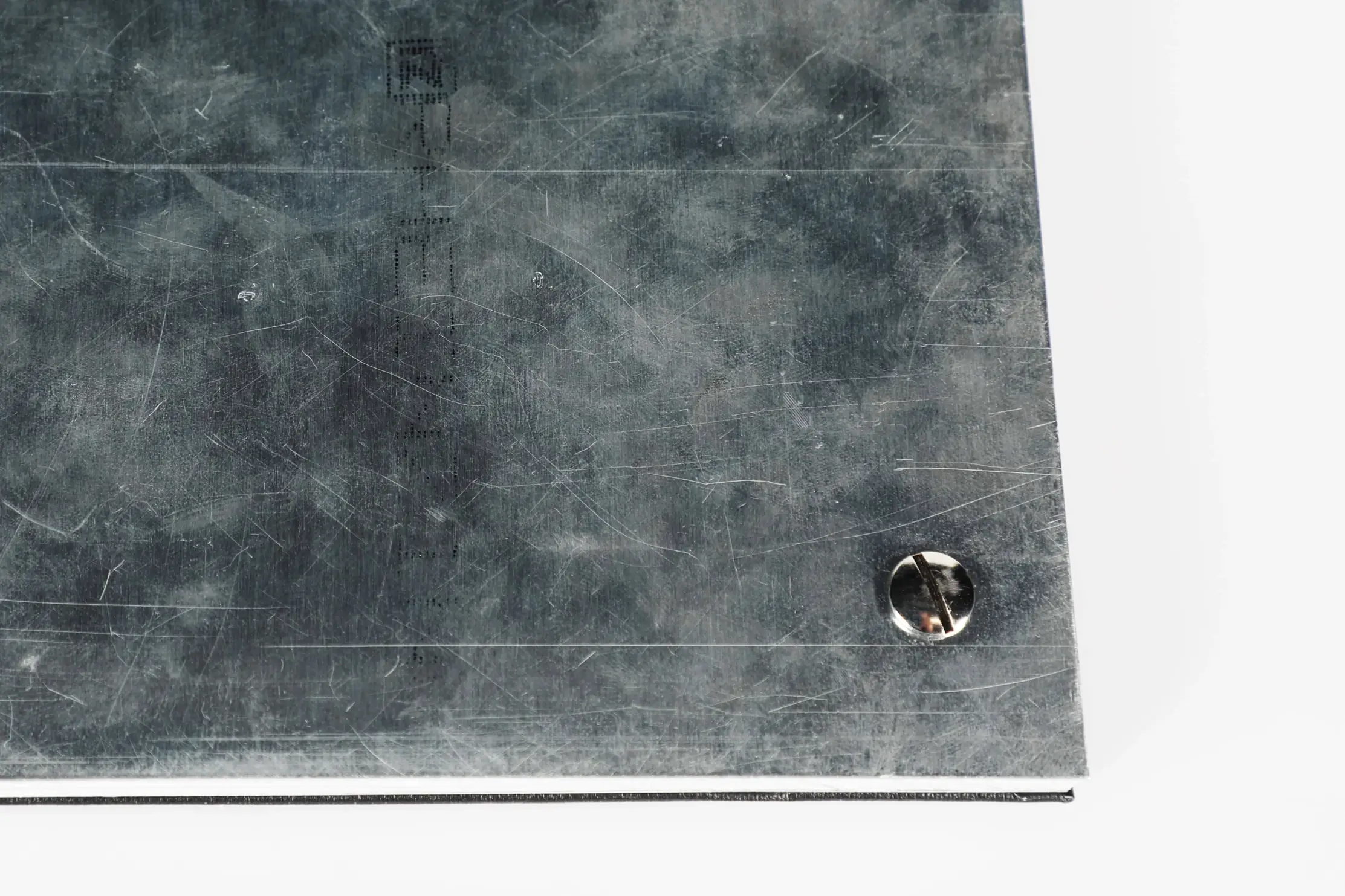
Back cover: Zinc sheet, 2mm
Binding: 12mm Screws
Printed: ArtEZ University of the Arts, Arnhem
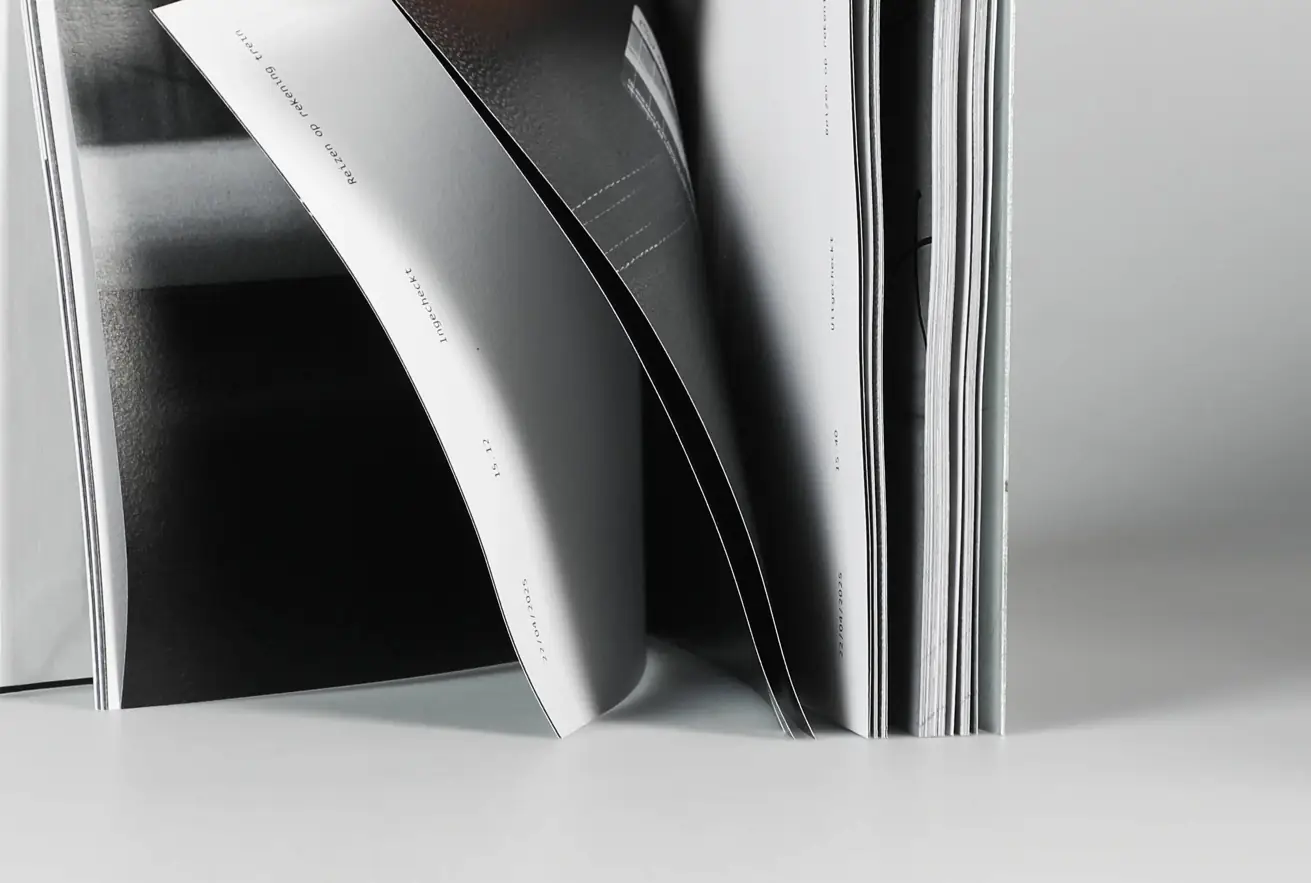
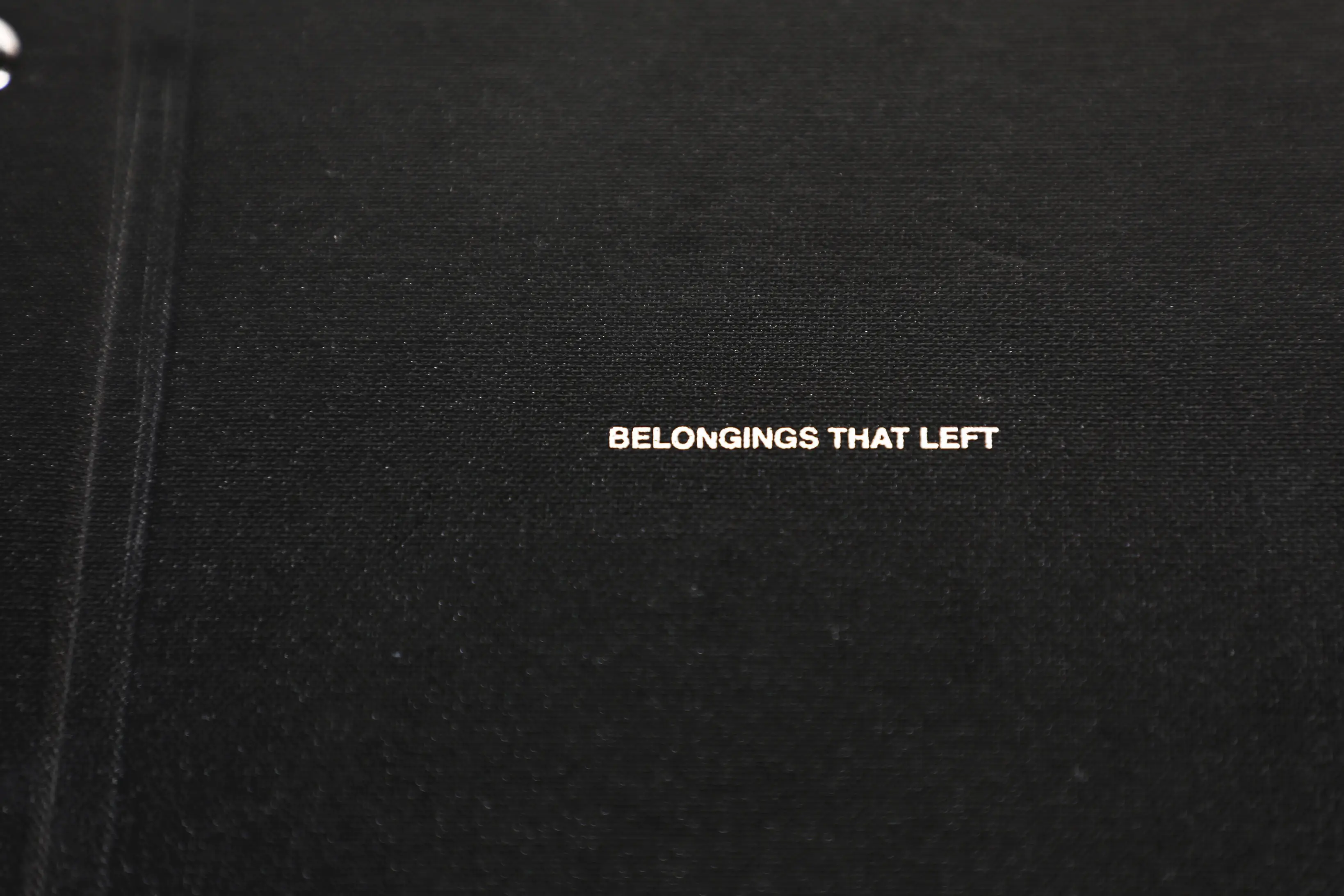
BELONGINGS THAT LEFT, 2025
“Belongings that left” explores the small traces people leave behind on Dutch trains, using minimalistic photography to reveal unnoticed narratives and details hidden in everyday travel.
Through repeated trips between Arnhem and Nijmegen, train was the main observation point, where imagery was collected and archived.
These photos were organized into four groups, and sets of four were combined to form simple visual narratives, transforming overlooked details into a subtle record of human presence.
The final book mirrors the physicality of the train itself through materials, turning the publication into an extension of the environment it documents.
Source: AnotherMag
Paper: Lessebo Design
Natural; IBO one
Printed: ArtEZ University of
the Arts, Arnhem
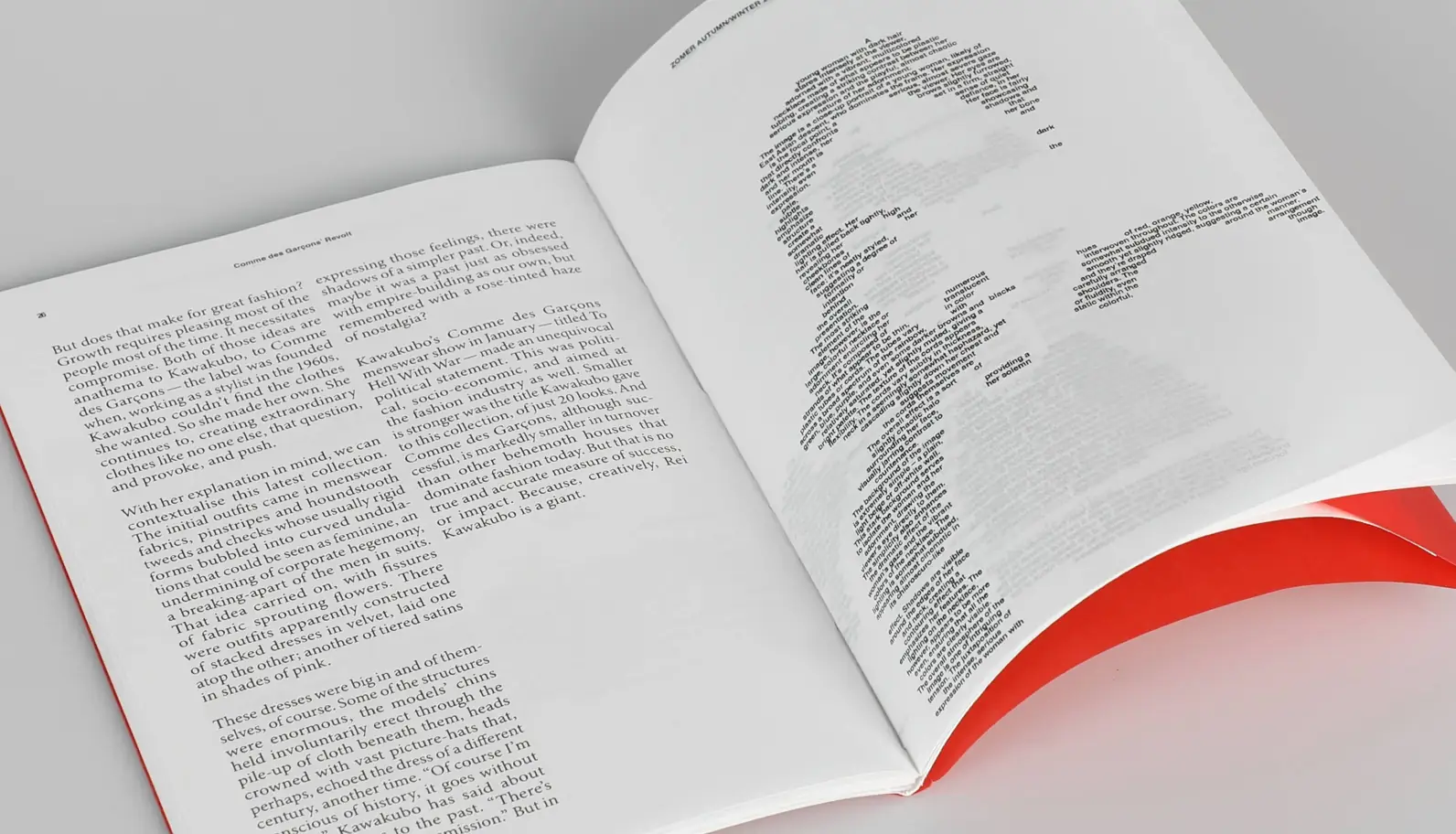
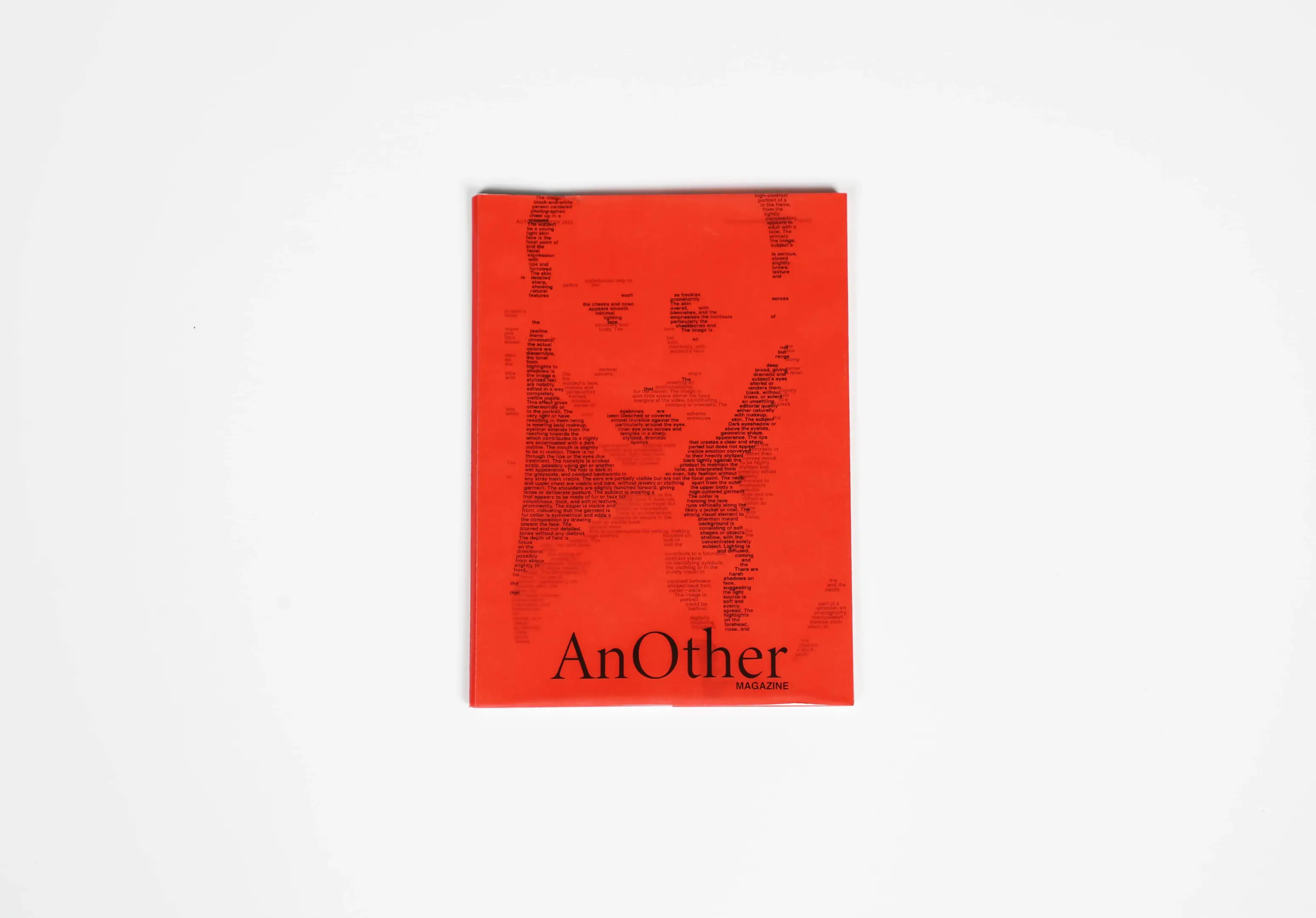
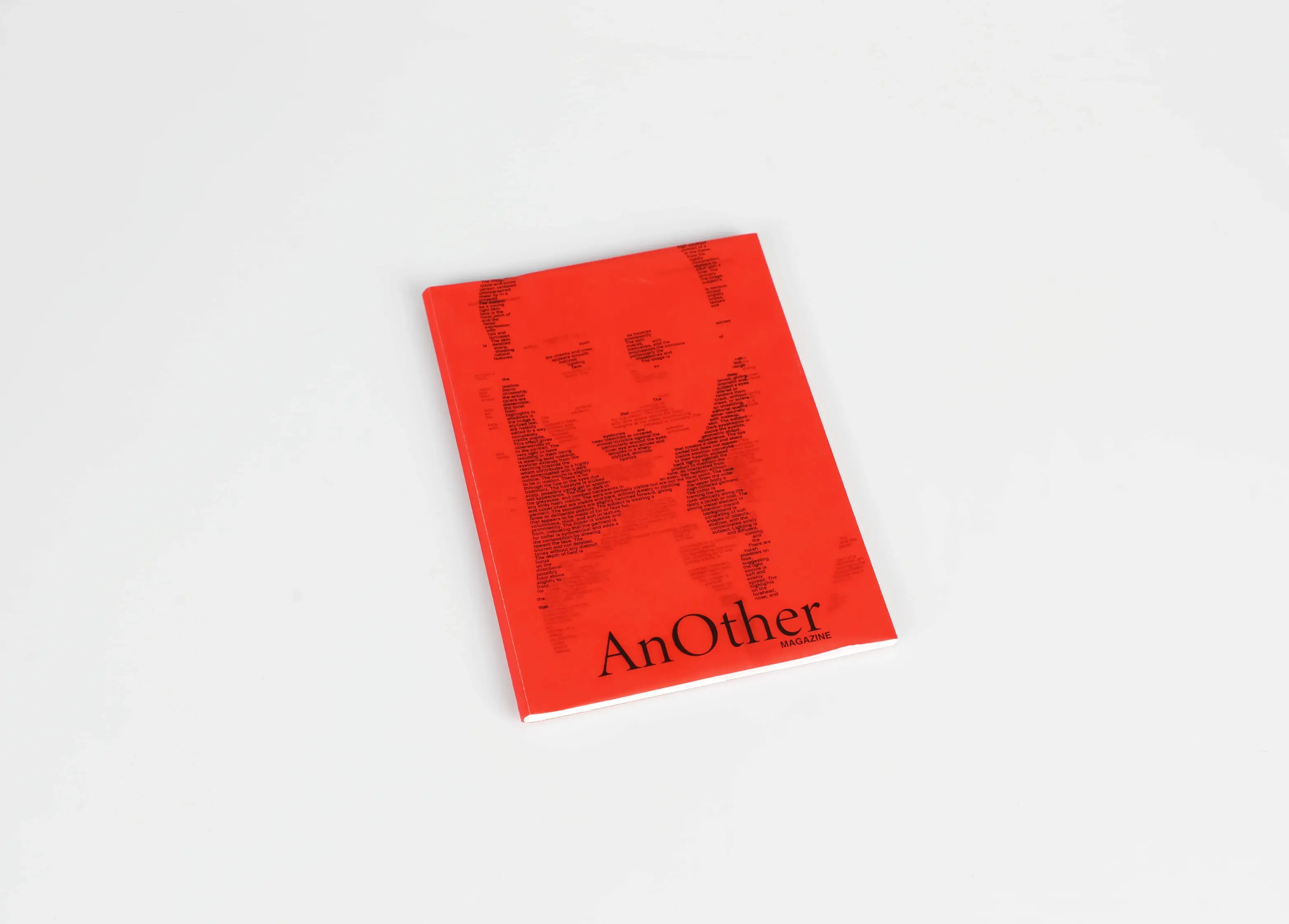
ANOTHER MAGAZINE REDESIGN , 2025
Another Magazine redesign
project focuses on redesigning a magazine under strict
limitations, including an A5
format and the complete
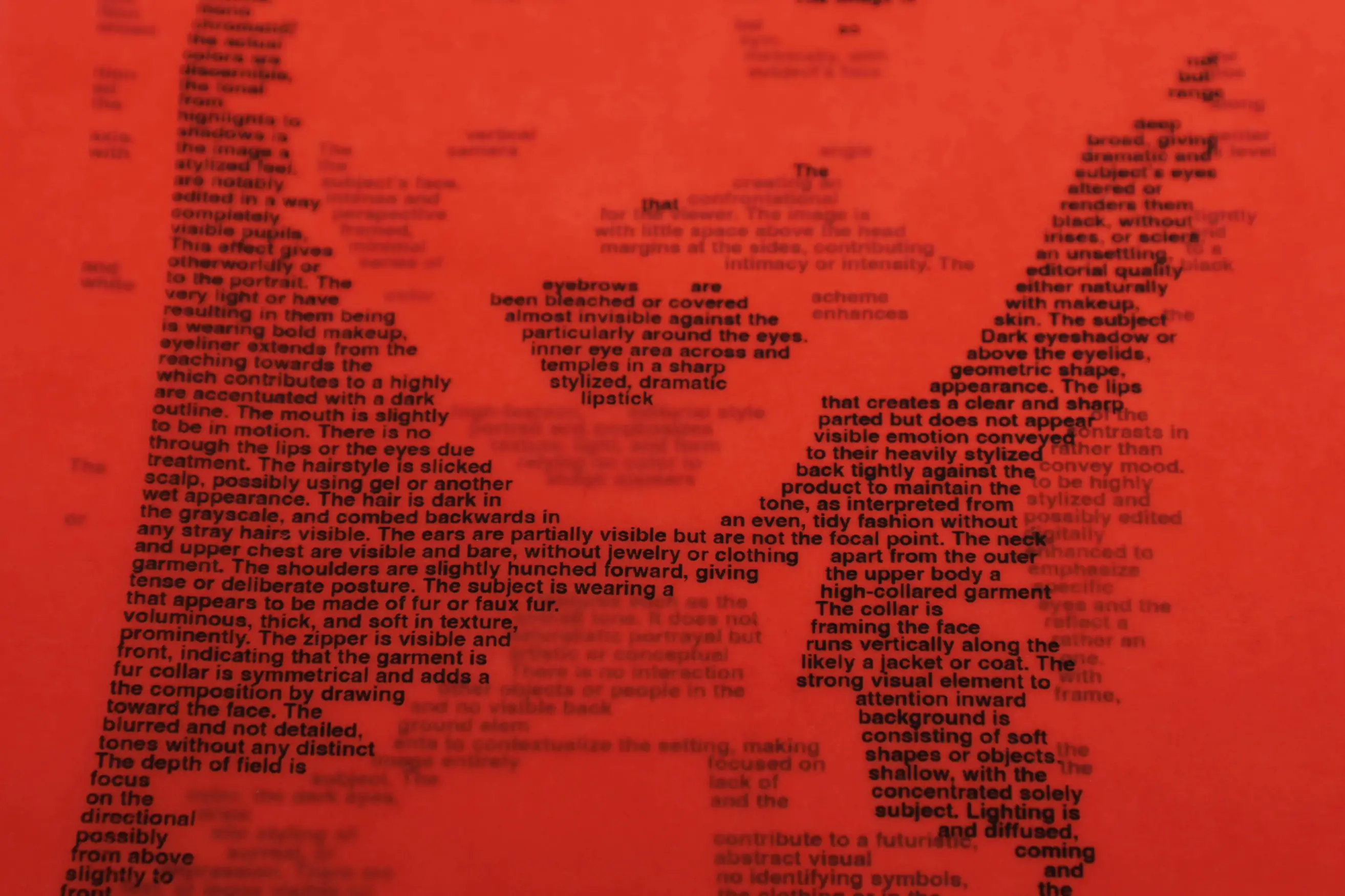
absence of imagery.
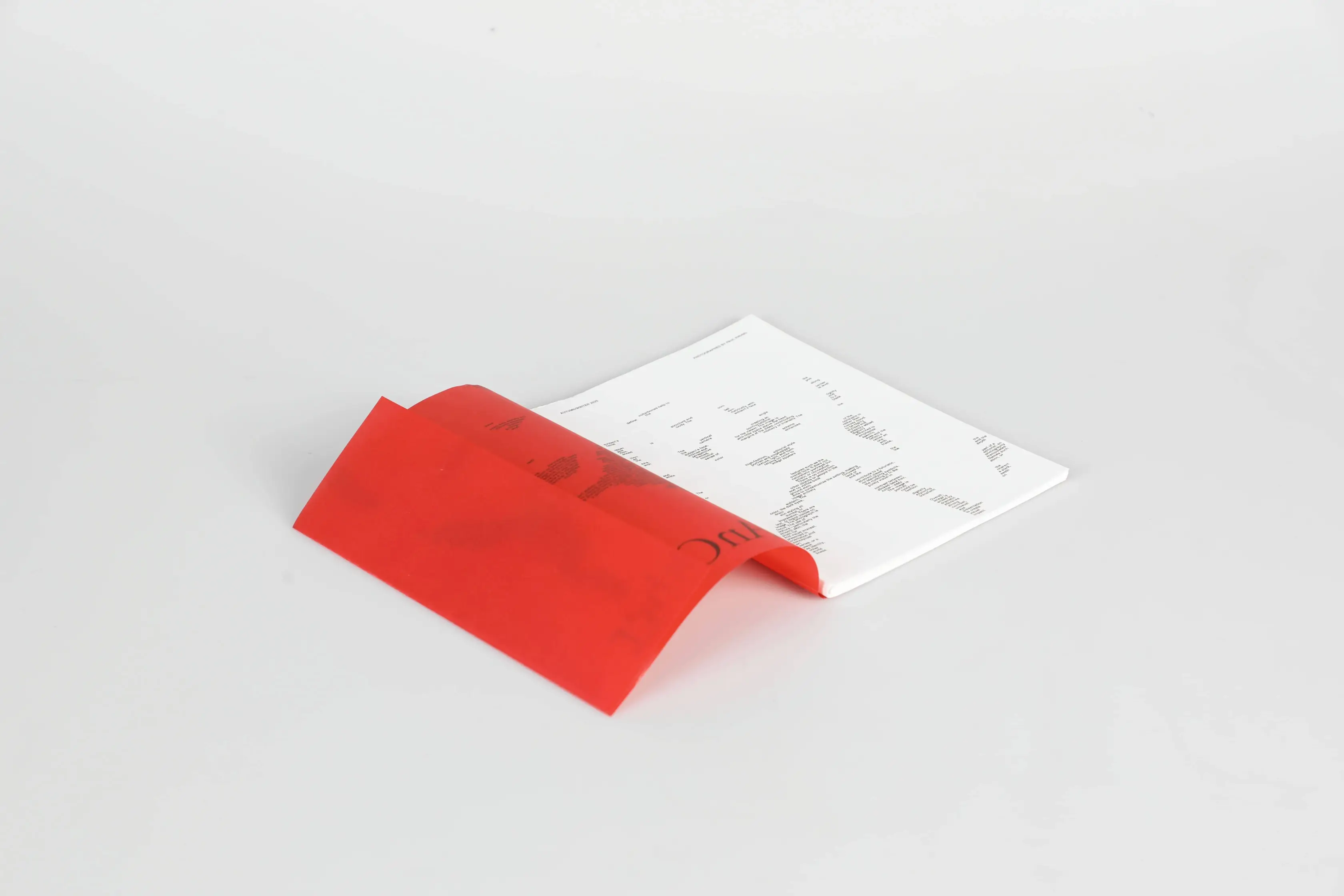
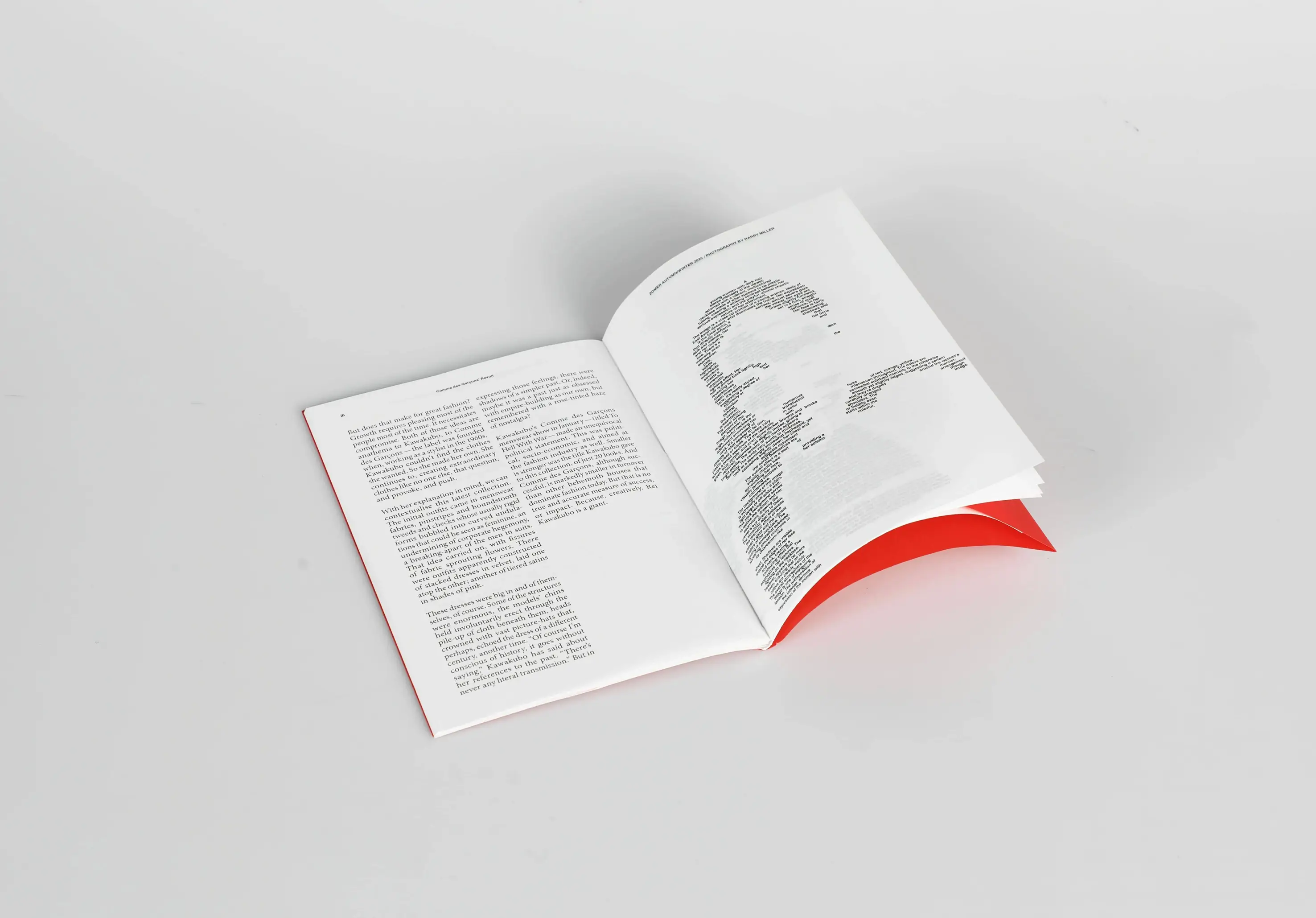
The challenge of working
without images inspired the
creation of double-sided
pages where photographs
from the original magazine
were reconstructed entirely
through only text. Using
AI-generated descriptions of
the images ensured a neutral,
machine-based interpretation,
allowing these “non-image
images” to appear through
variations in paper transparency and density.
The layout was guided by the
visual structure of the original
publication, maintaining its
rhythm while transforming its
content. All selected articles were taken from the Fall/Winter 2025 fashion week coverage.
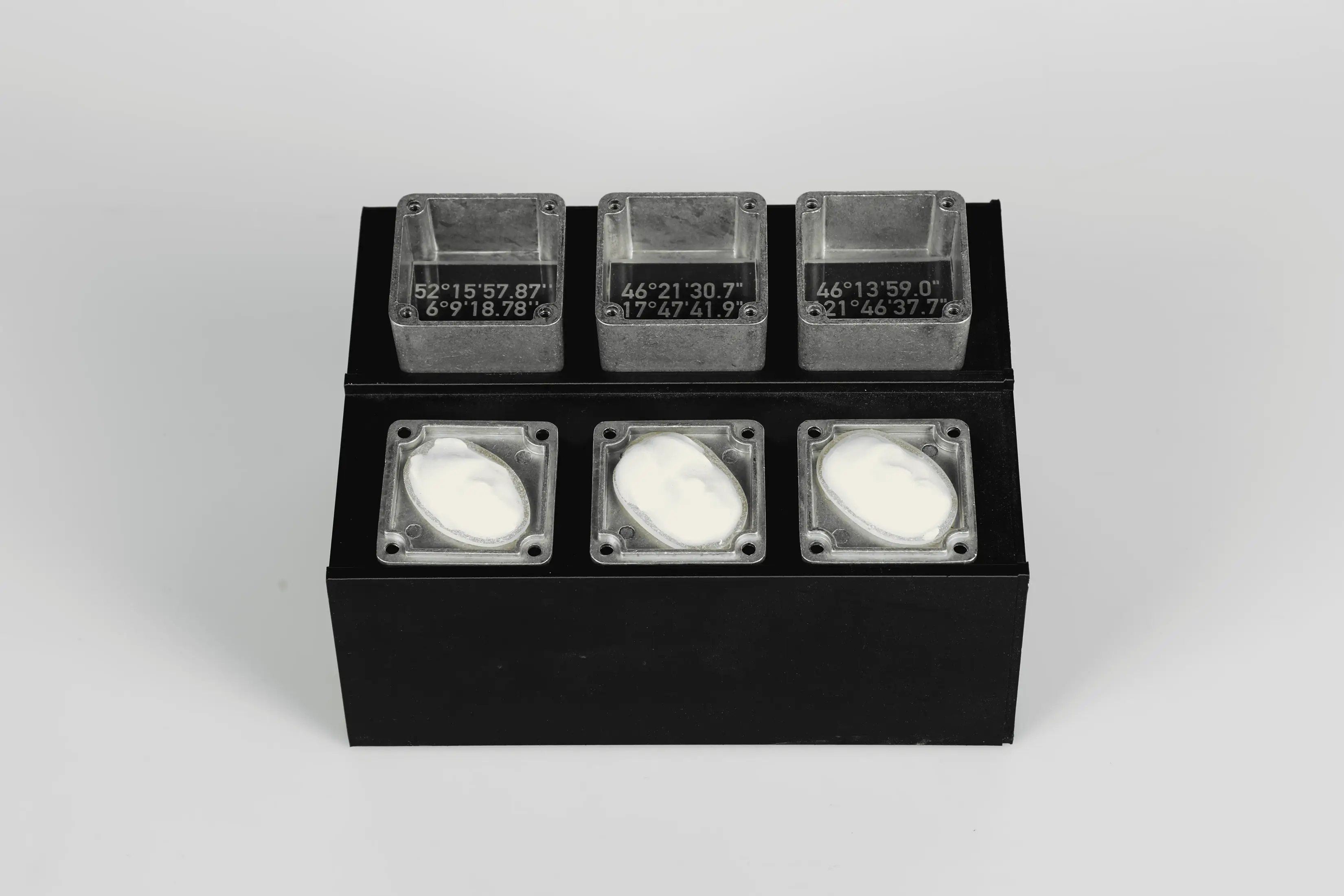
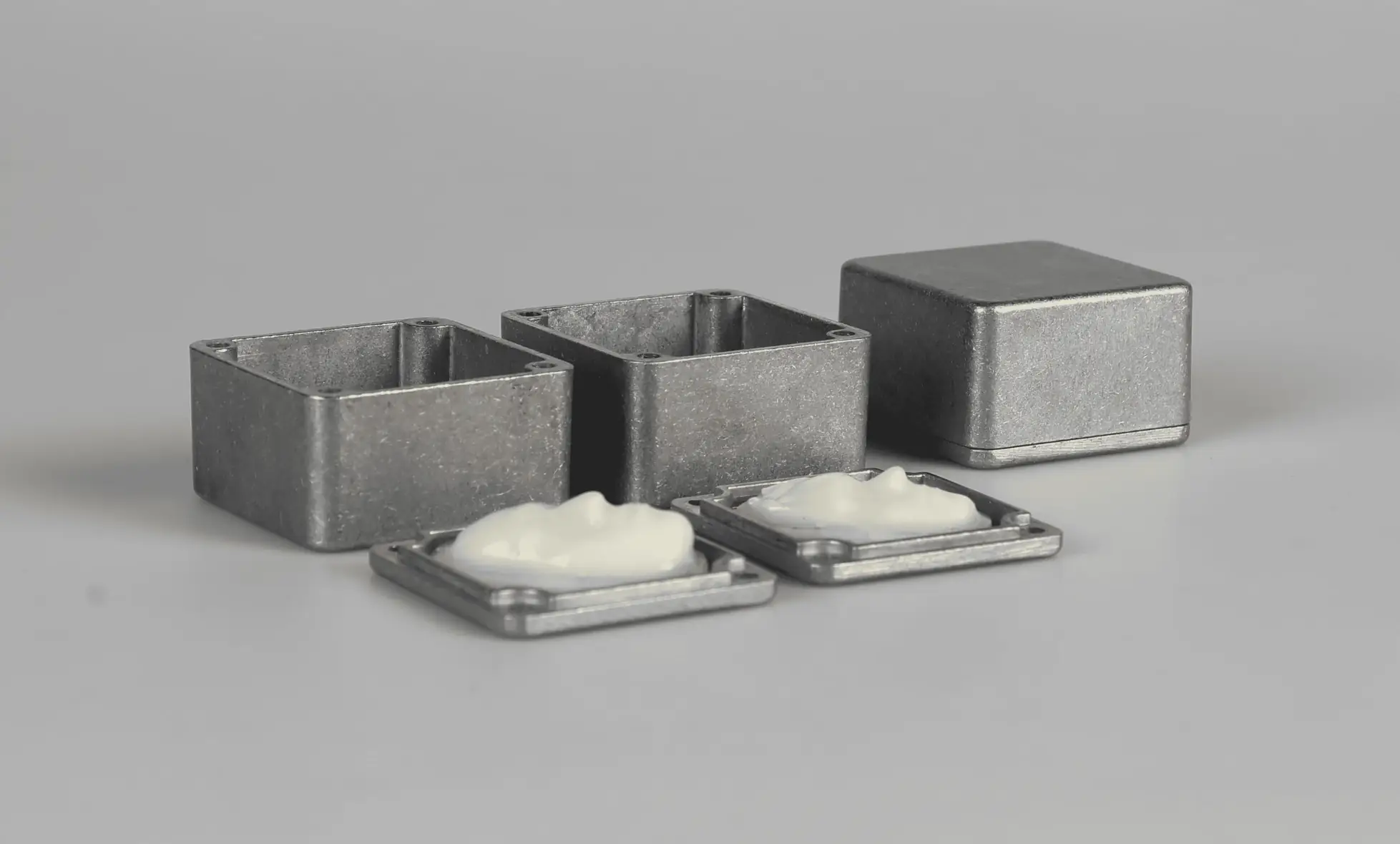
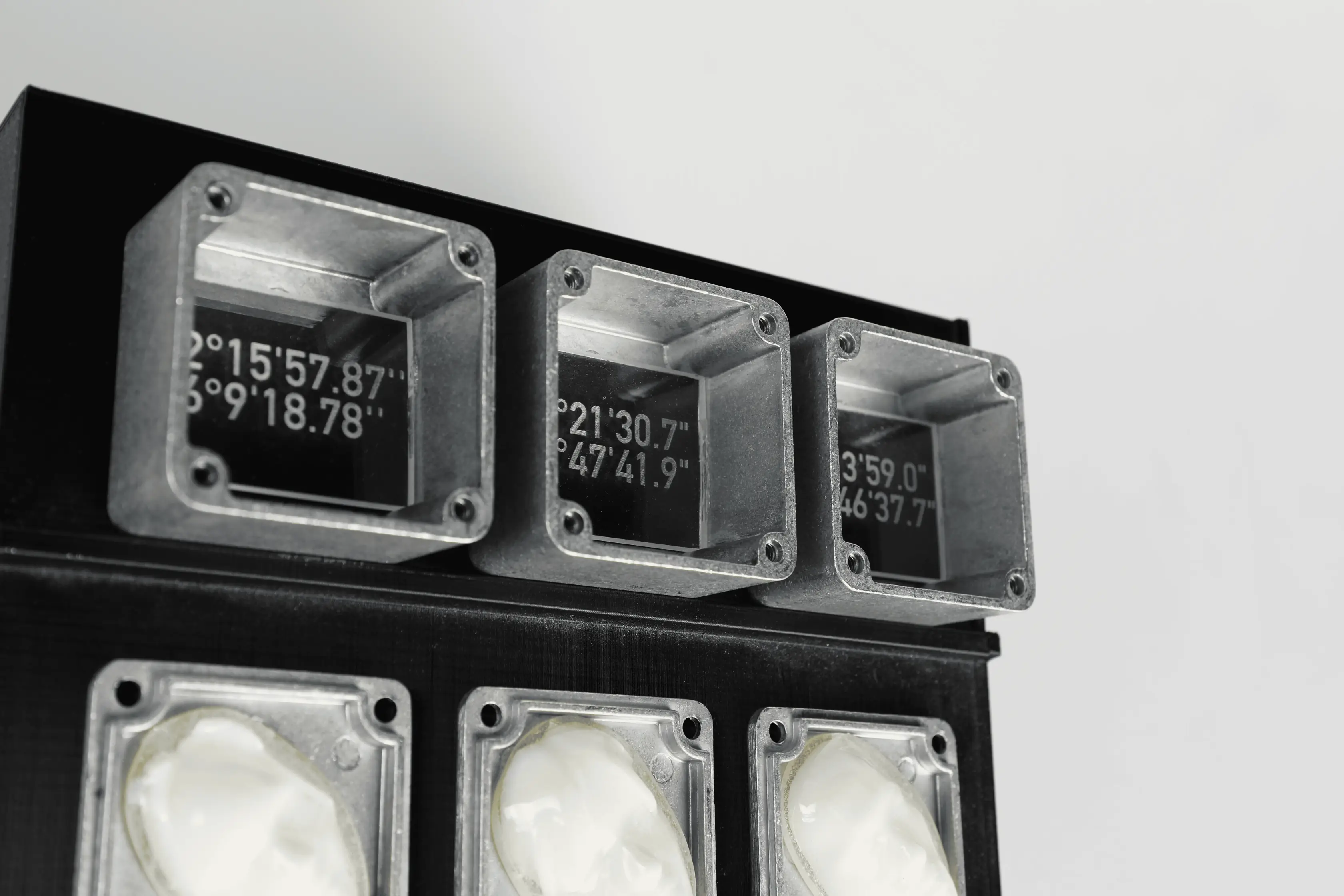
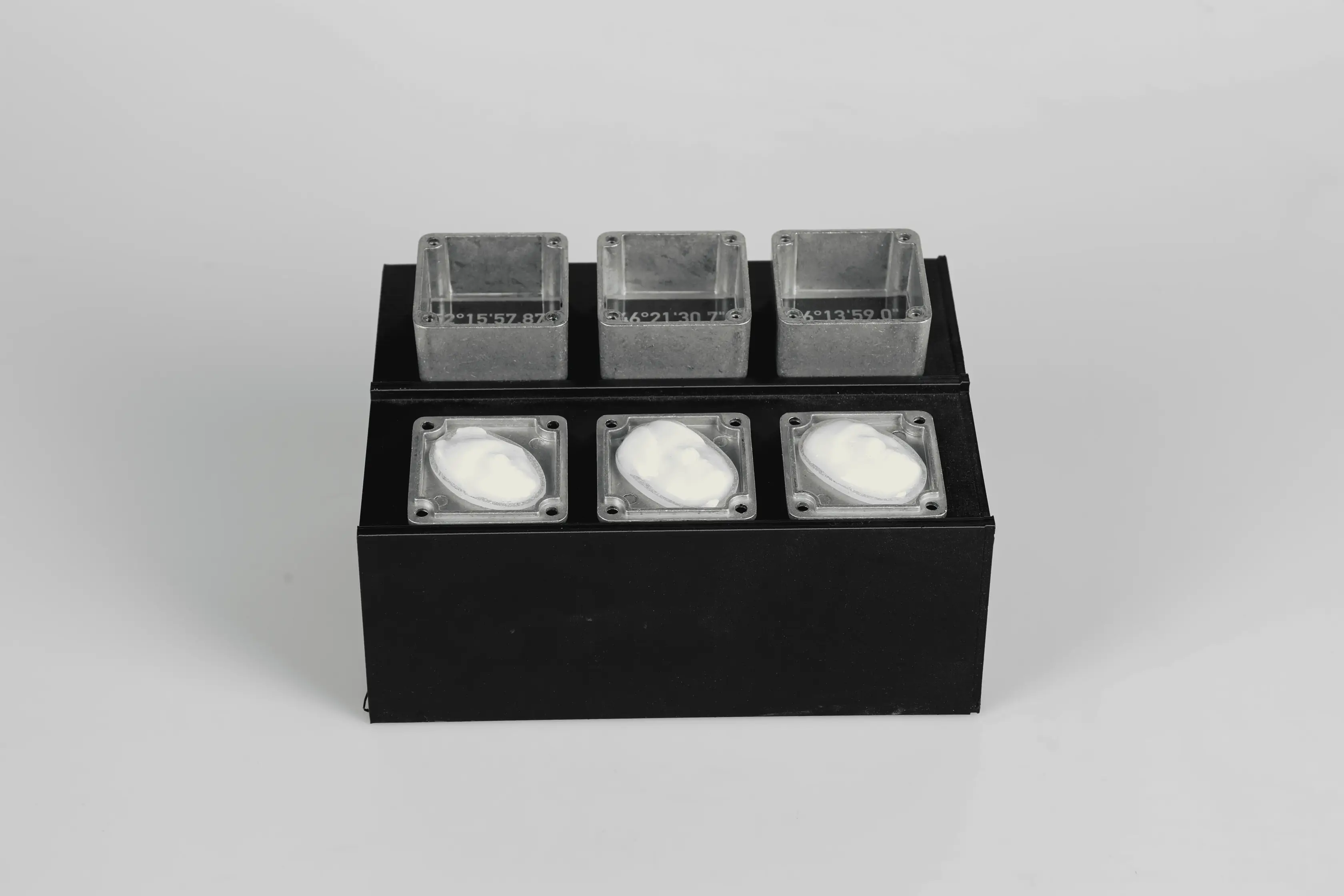
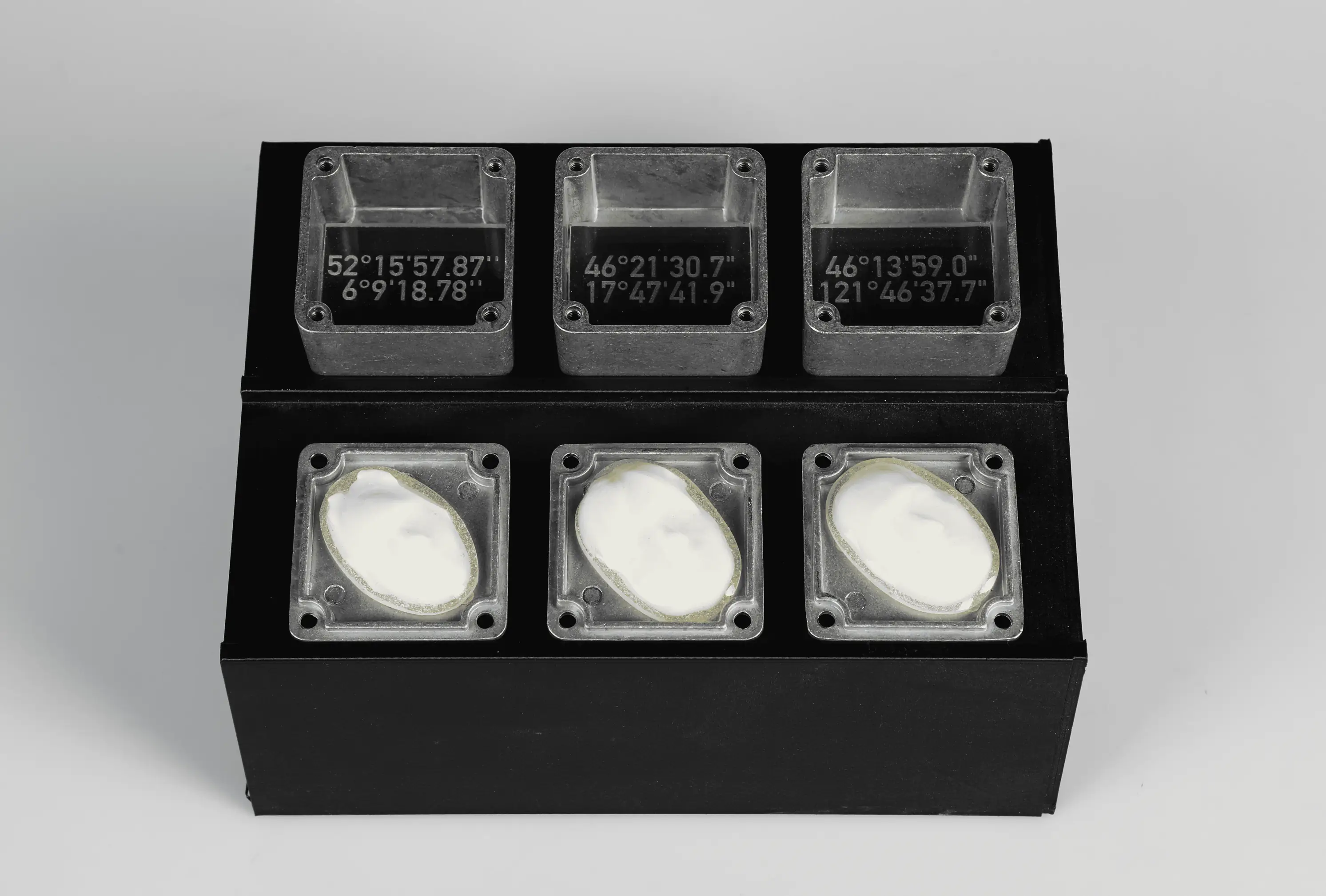
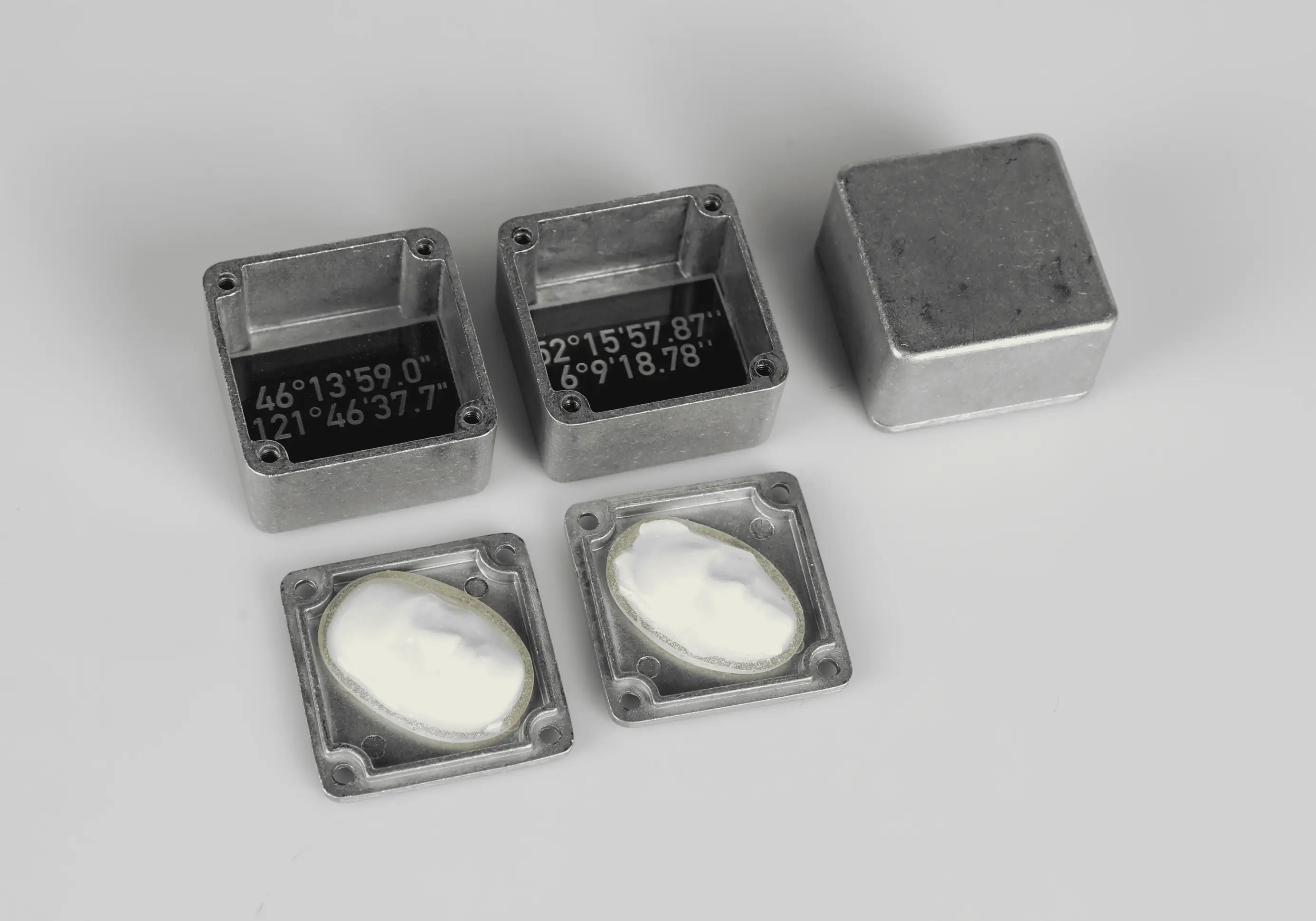
Printed: 3D Printer in resin
Coverage: Epoxy
Outside: Iron, screws
Data laser engraved on acrylic
(PMMA)
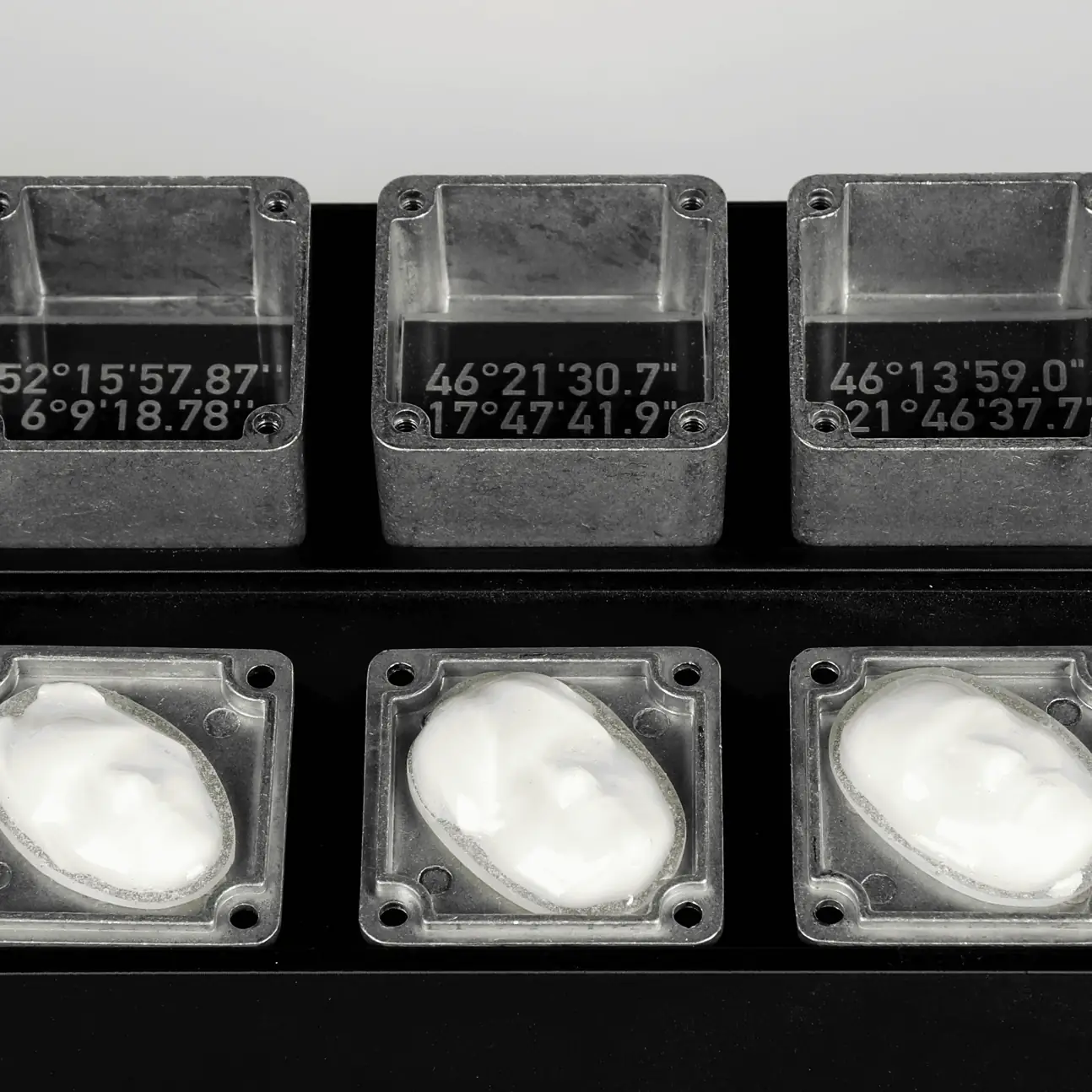
PRESERVING FACES, 2024
PRESERVING FACES projet
began with a speculative
question: if something were
to be preserved for 10,000
years, what should it be?
Instead of thinking only about
the future, the starting point
became the opposite - what
would be meaningful to know
from 10,000 years in the past?
The answer was how people
truly looked like. From that
idea grew the intention to
preserve human appearance
for the distant future.
The work focused on creating
3D scans and prints of faces
from people of different back-
grounds, recording only their
origins and leaving out names
or personal details to keep
the emphasis on physical
appearance and ethnicity.
These faces were placed
inside metal boxes, imagined
as objects meant to be buried
beneath the ArtEZ Rietveld
building, the place where all
of these individuals happened
to meet. The result is a
speculative time capsule that
attempts to carry the image of
us into a future we can’t yet
imagine.
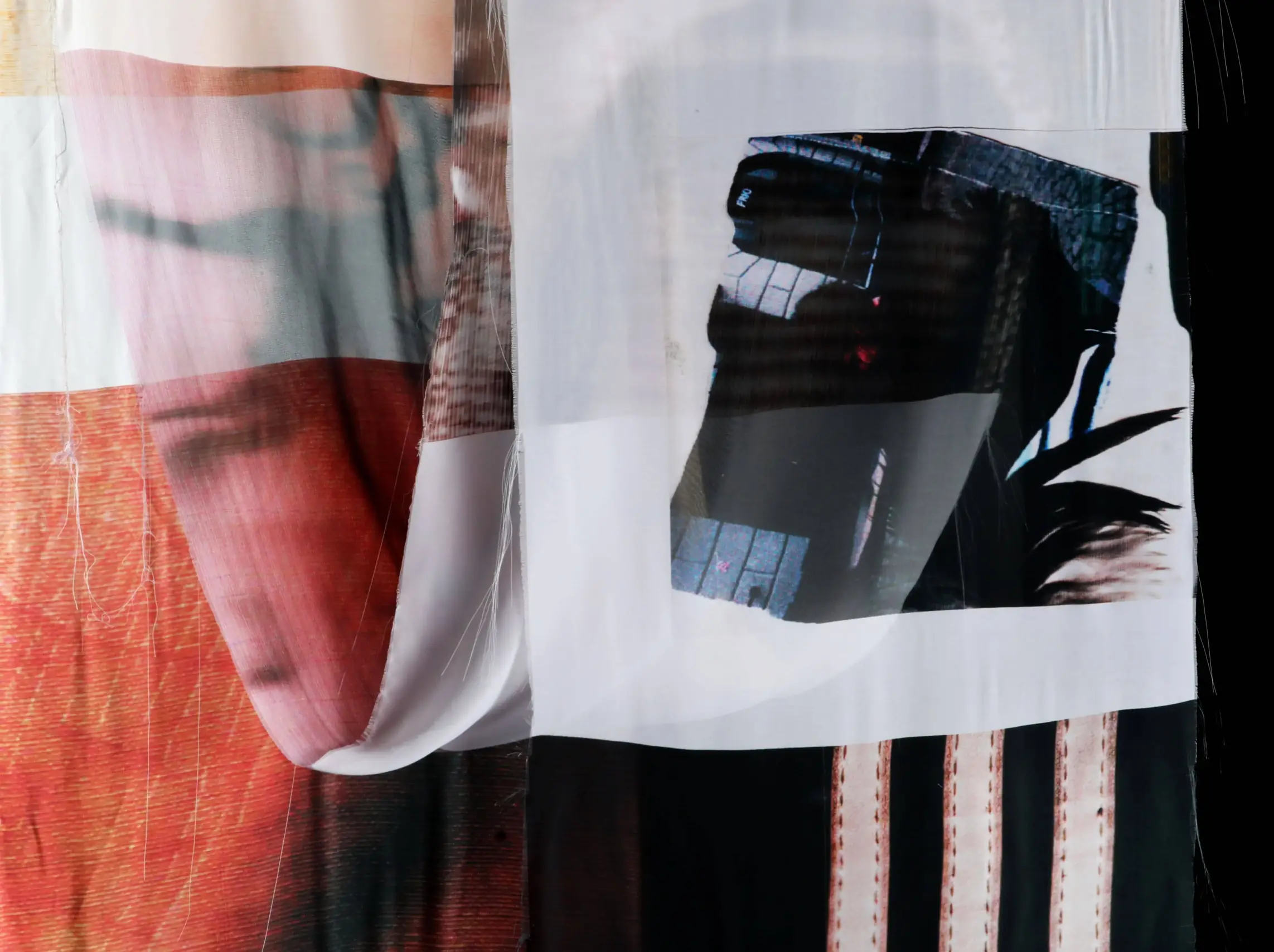
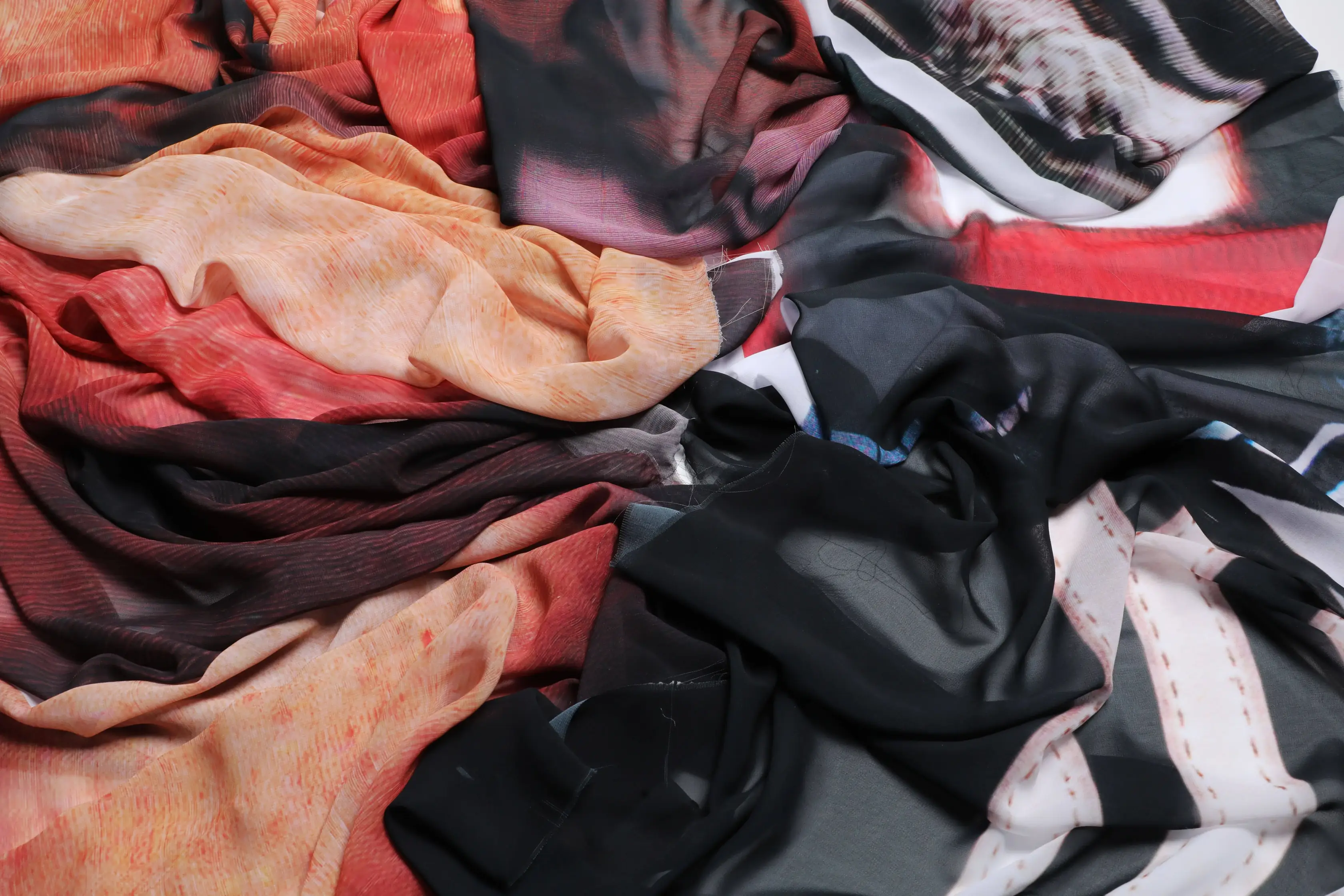
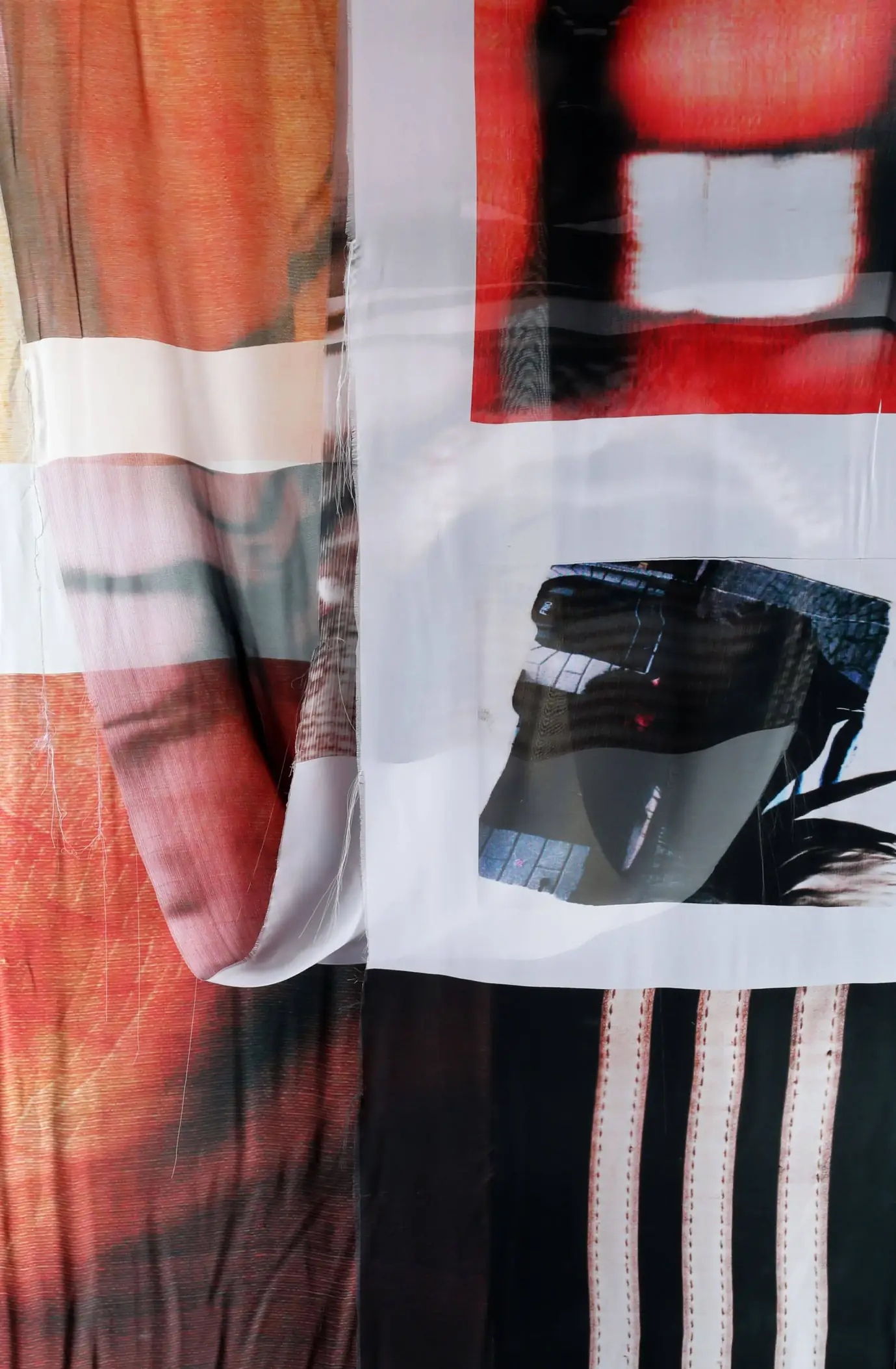
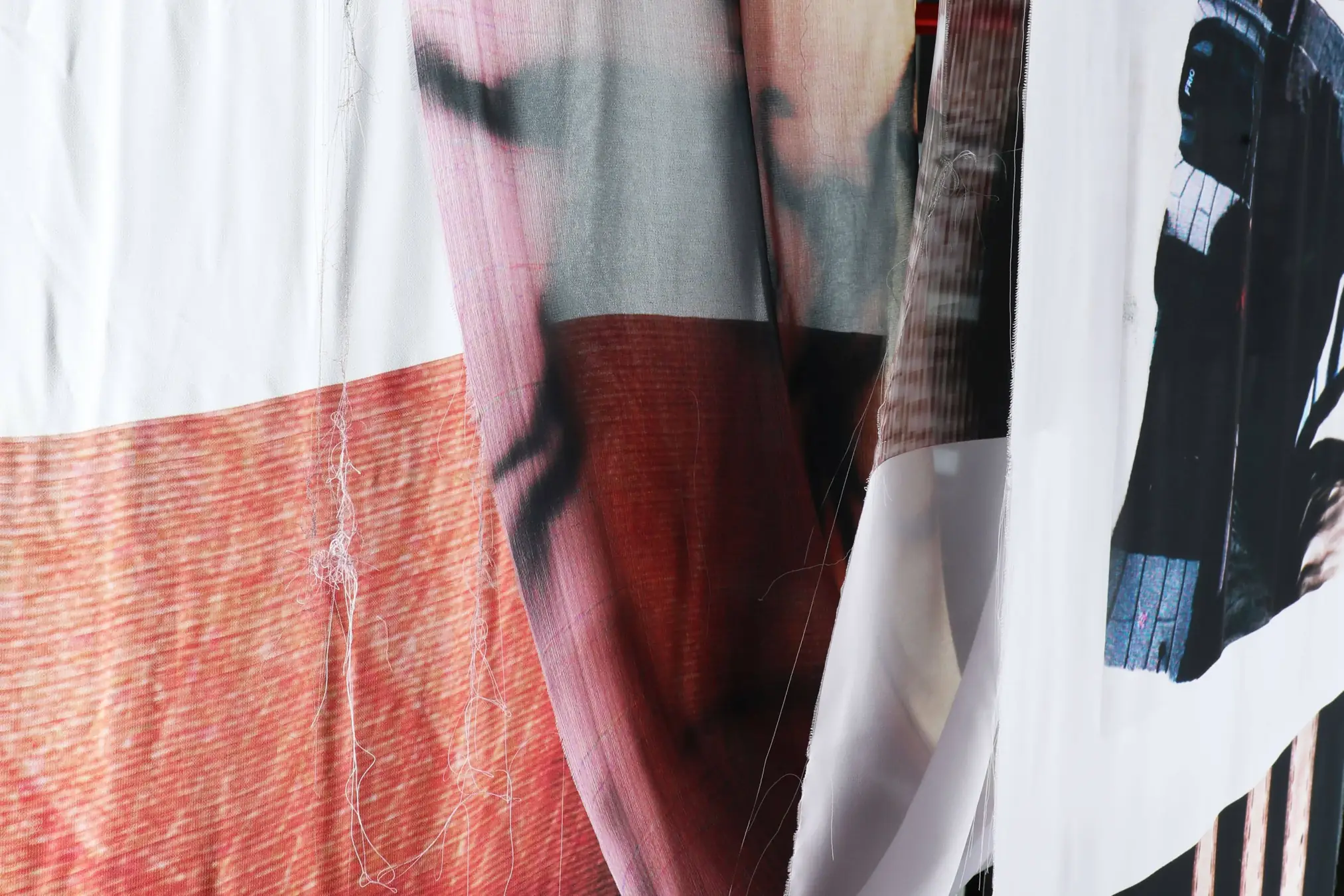
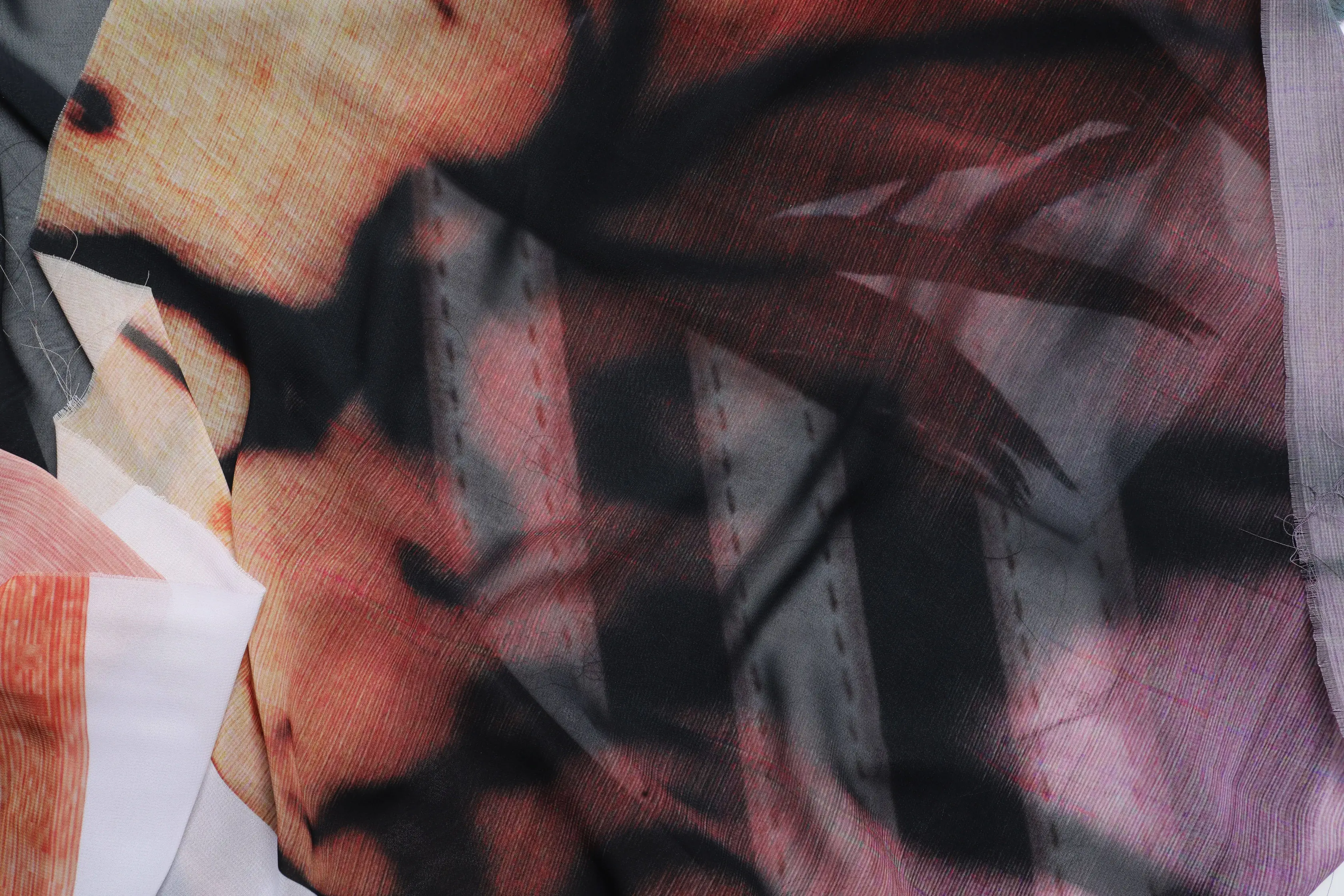
Material: Textile, wood
Printing: Sublimation print, heat-pressed
Tool: Portable scanner
INTIMACY(scanned), 2025
Intimacy(scanned) is a project that rethinks the idea of portraiture by focusing on the importance of small details rather than the complete image and reflects on how technological processes can both reveal and distort the way people perceive themselves and others.
These “fragments” of a person carry a sense of intimacy and presence that often speak more truthfully than a complete image.
My core idea was to explore my fascination with people and the ways they are represented visually through portraits. I believe details speak louder than the whole, so I set out to capture them.
Using a portable scanner, I collected imagery from four “layers” of myself: skin, tattoos, clothing, and personal items, and arranged them on a single, seven-meter-long textile piece. Each layer overlays the others yet remains visible, creating a kind of collage of myself.
I chose textile and sublimation printing because this material, as well as the fragments that I’m using, feel subtle, intimate, and tender, and the chosen fabric allows layering while preserving transparency and delicacy.
Paper: Holmen TRND Vintage, 70g
Cover: KRAFTLINE, 270g
Binding: Open spine, coptic stitch
Data: MISSING PIECES by The Trace
Printed: ArtEZ Univercity of the Arts, Arnhem
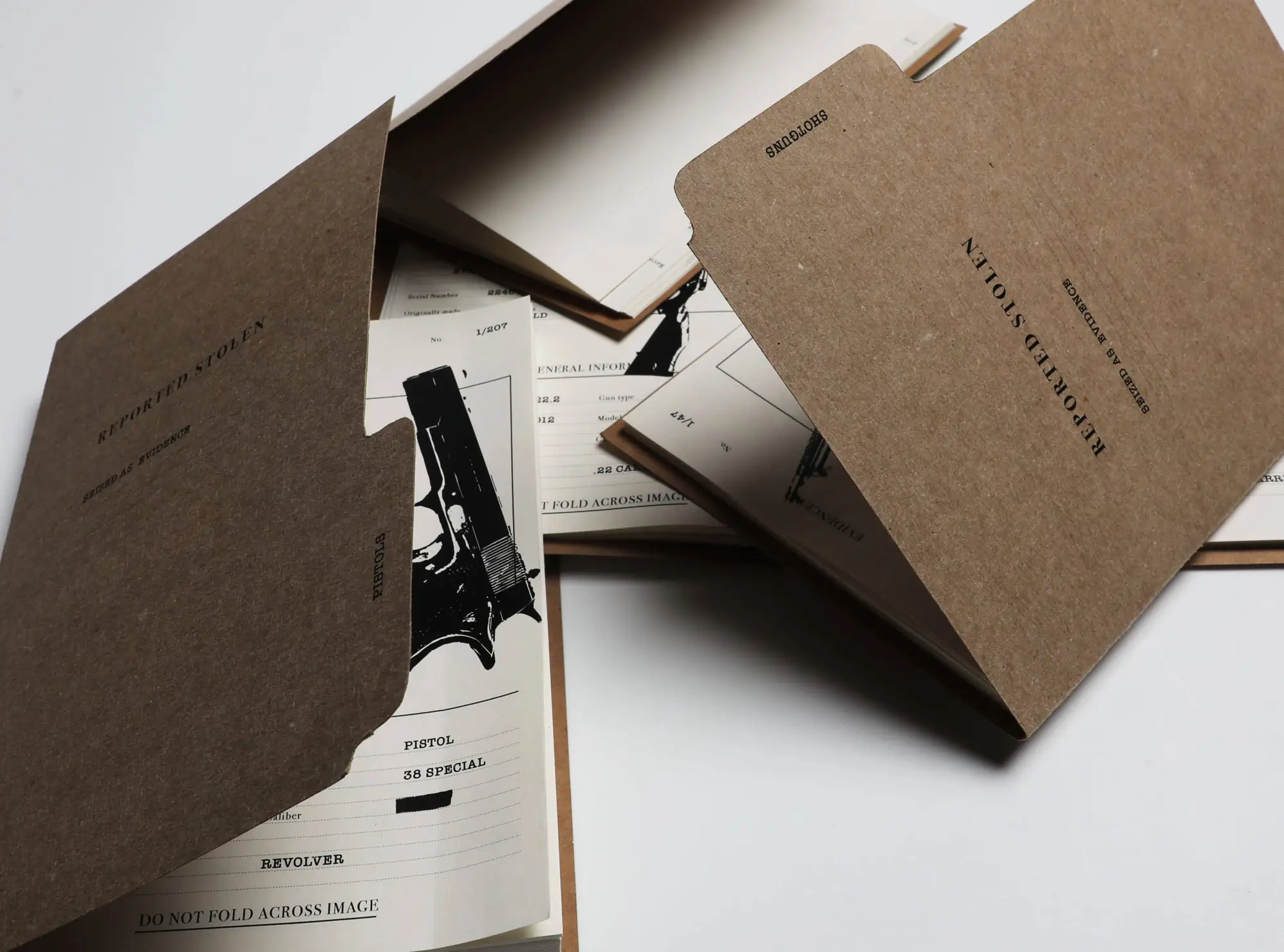
REPORTED STOLEN, 2025
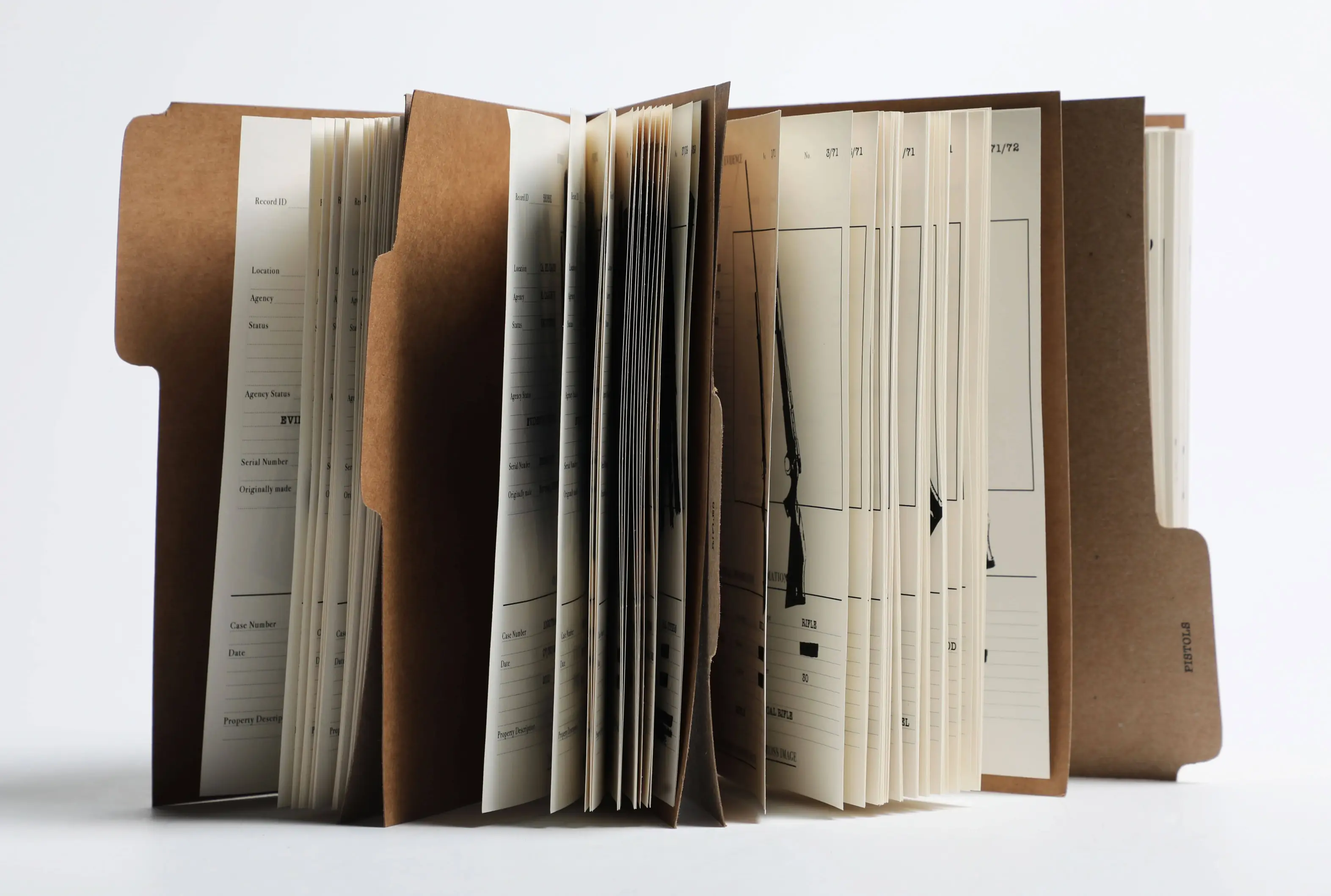
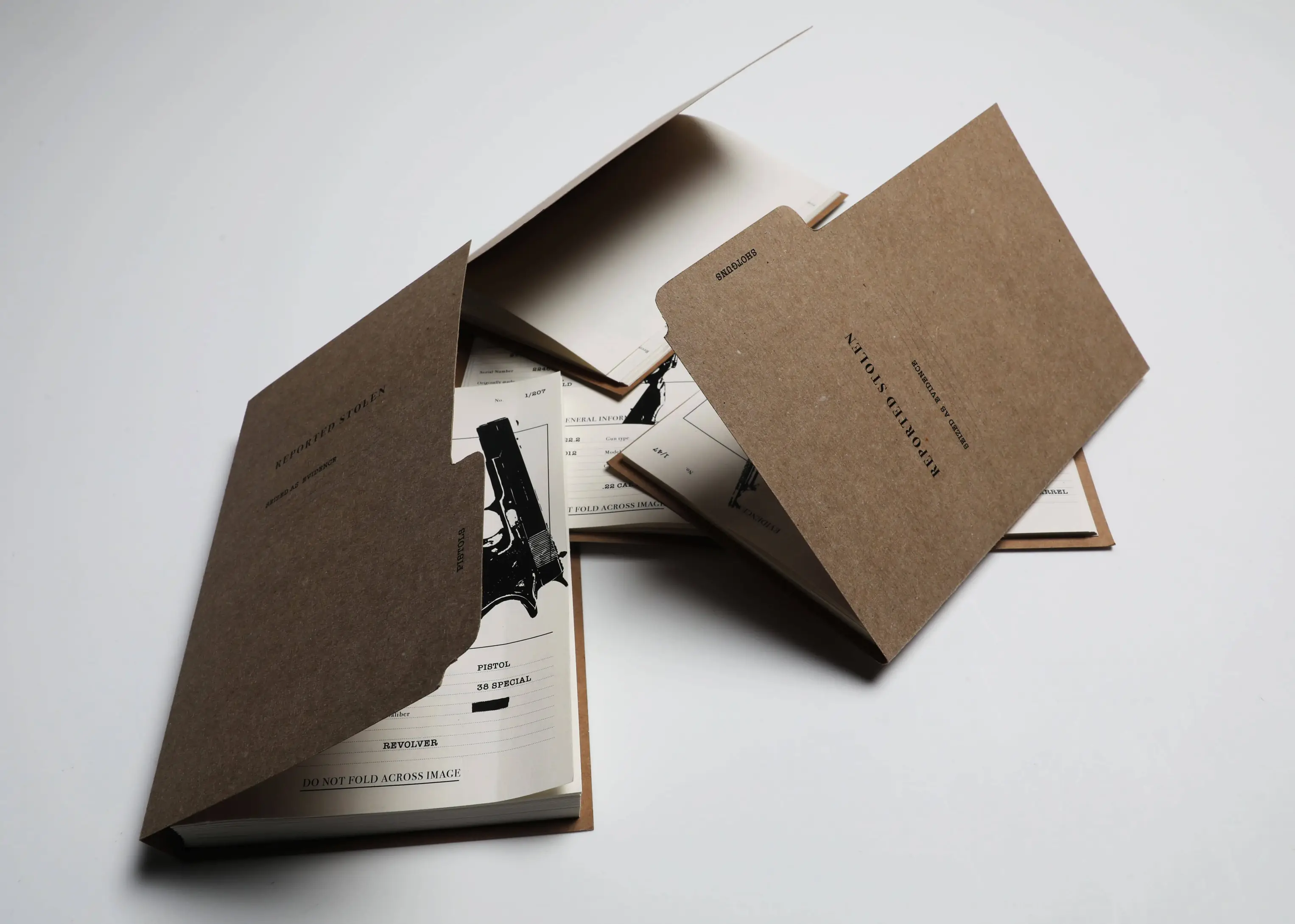
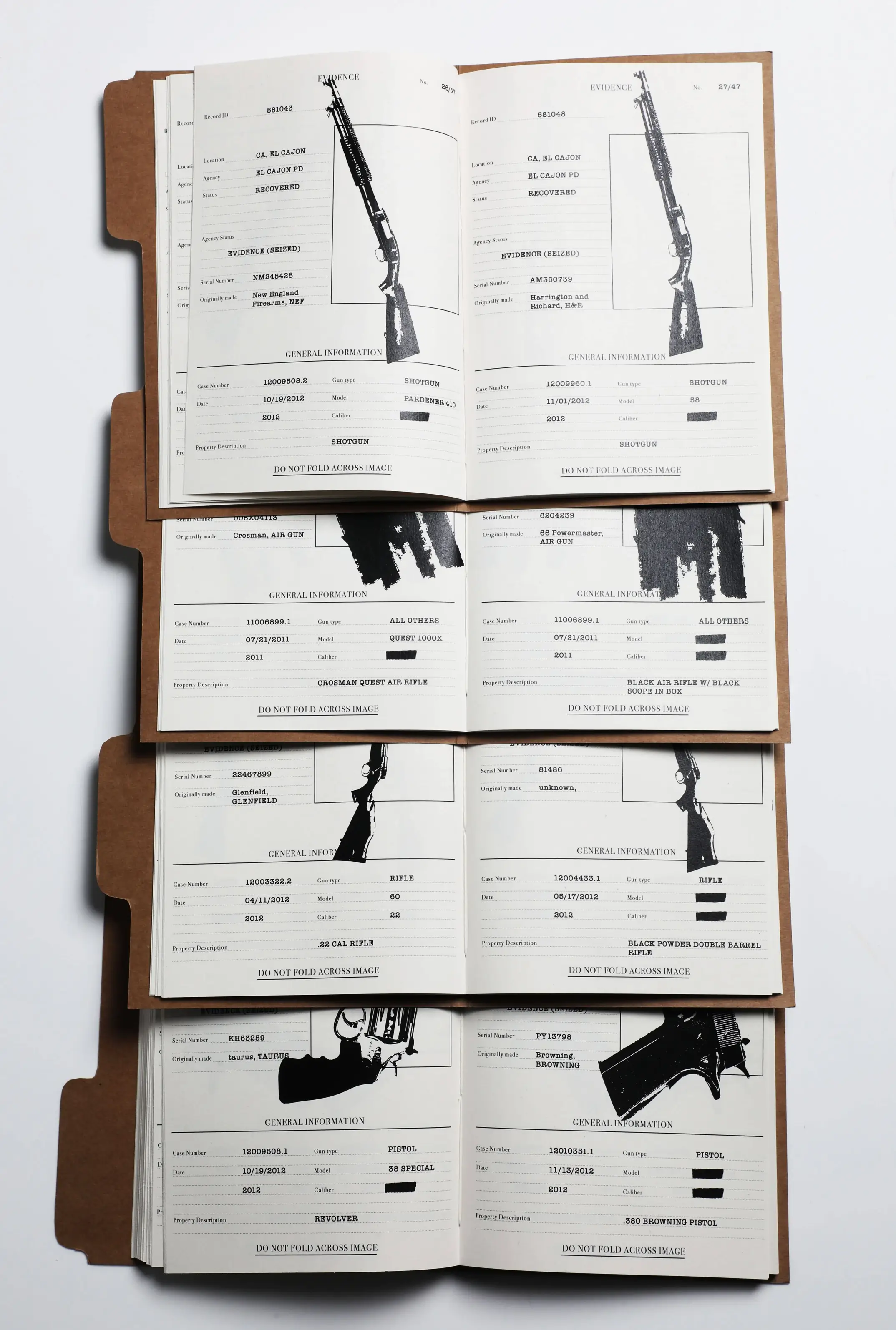
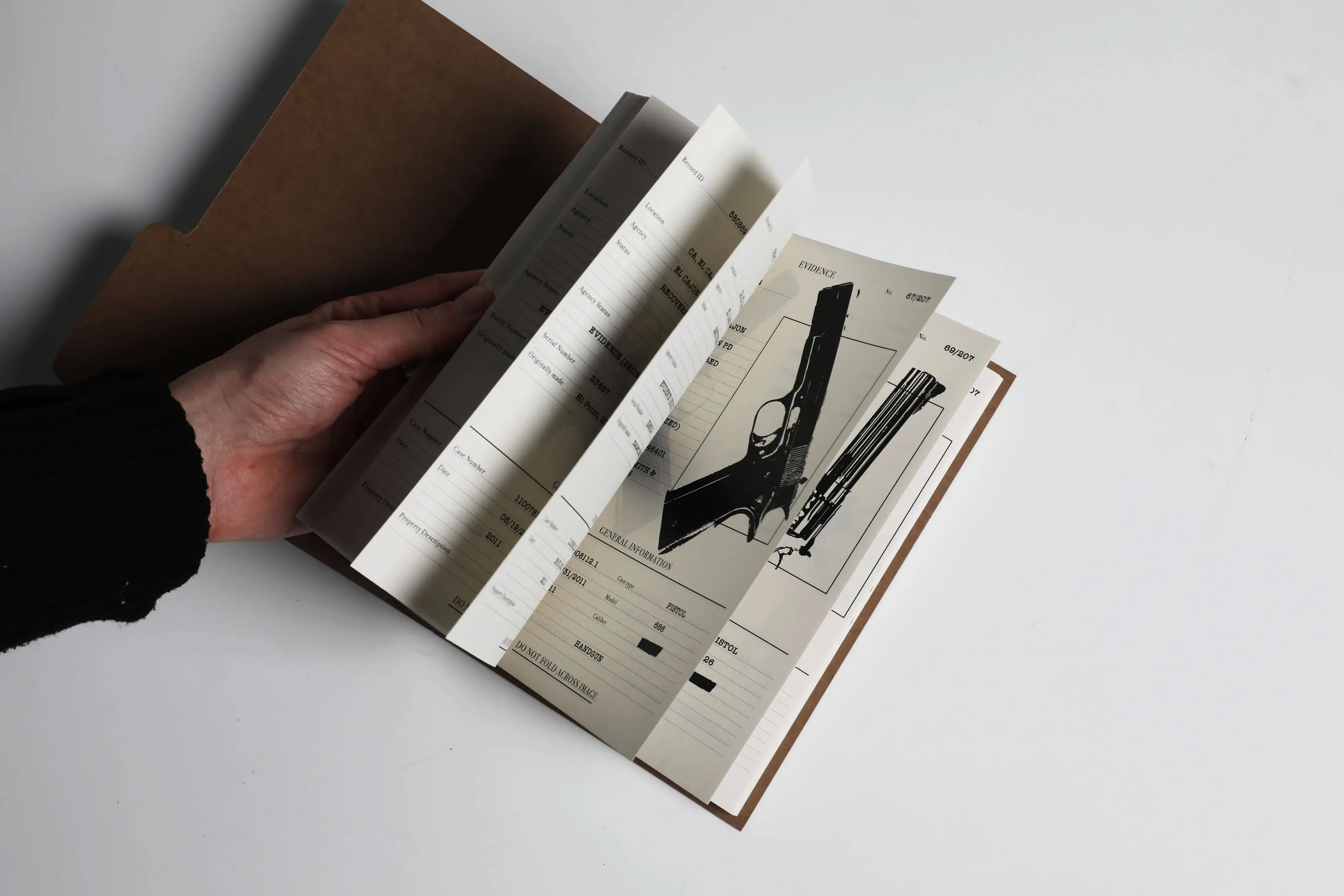
Reported Stolen is a project focused on building technical skills through the lens of data visualization. Using a dataset of missing firearms in the US between 2010 and 2025, the information is categorized by gun type and "agency status", specifically highlighting weapons seized as evidence at actual crime scenes.
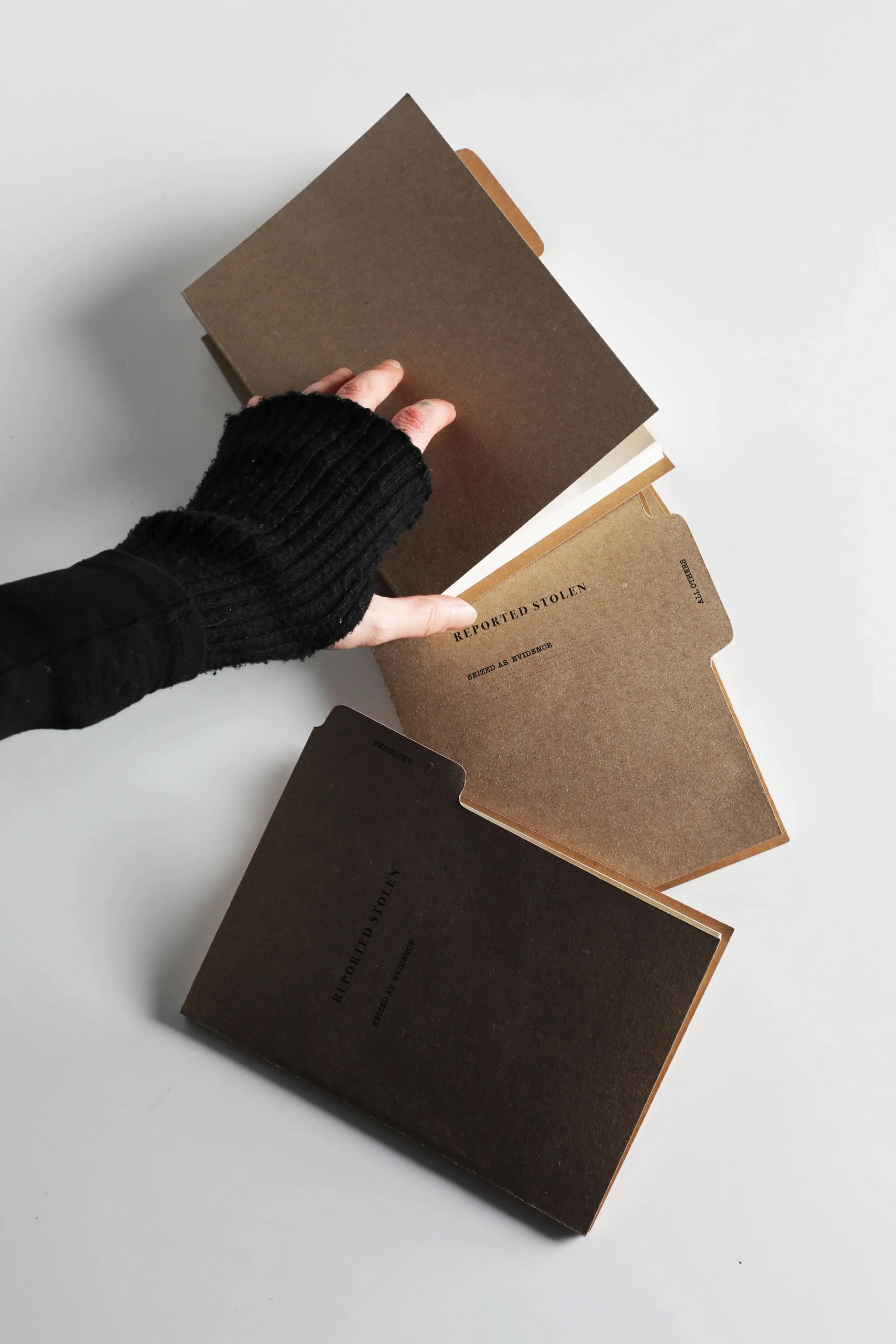
The project is organized into four collections, drawing heavy visual inspiration from the utilitarian look of official police reports. Data merge served as the primary tool for the layout; every image was converted into a glyph and automatically mapped into the design, alongside specific markers used to flag missing information.
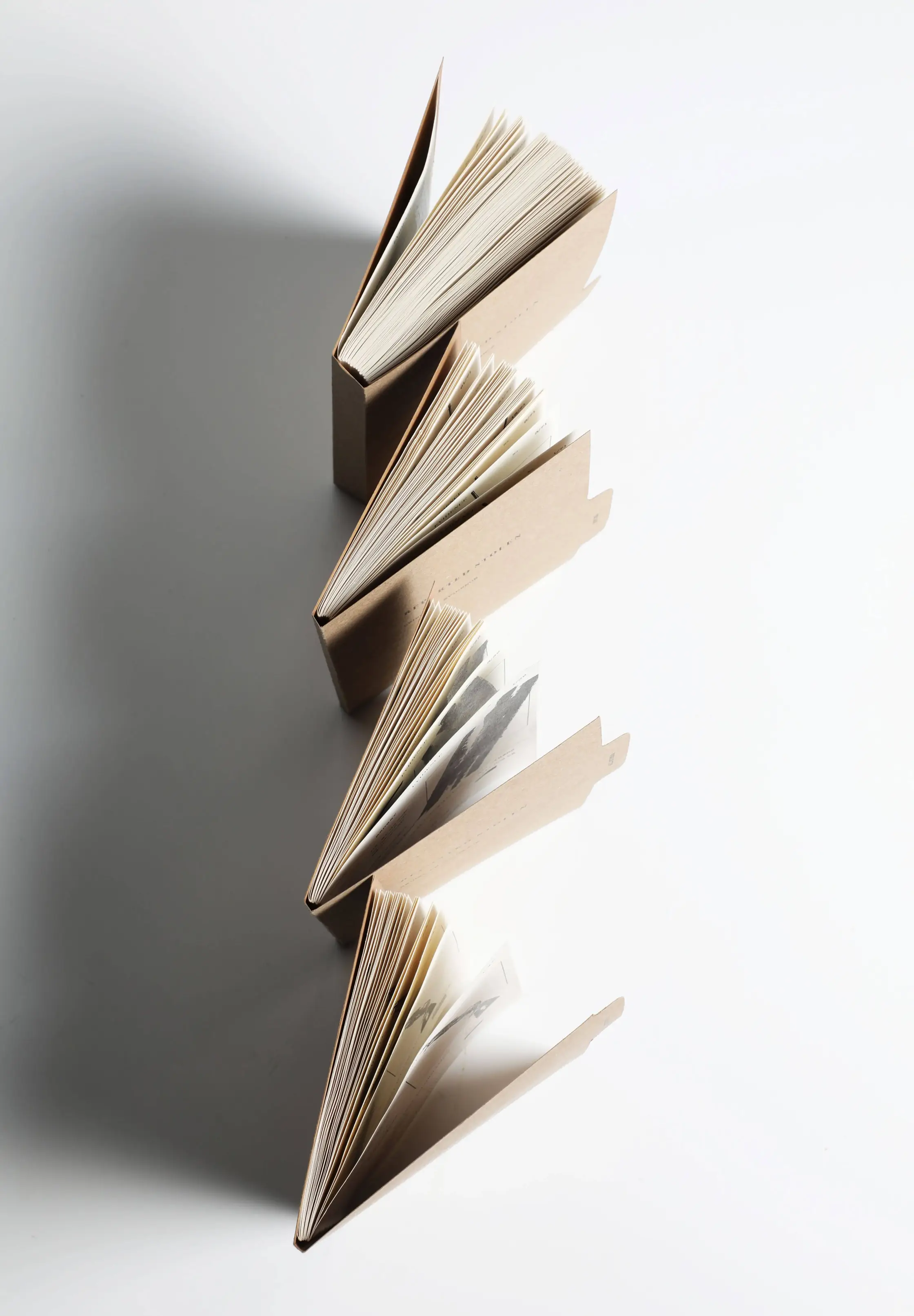
As a physical object, the project consists of multiple books designed with a modular approach. They can be stacked together to function as one cohesive publication or stand alone as independent deep-dives into specific firearm categories.
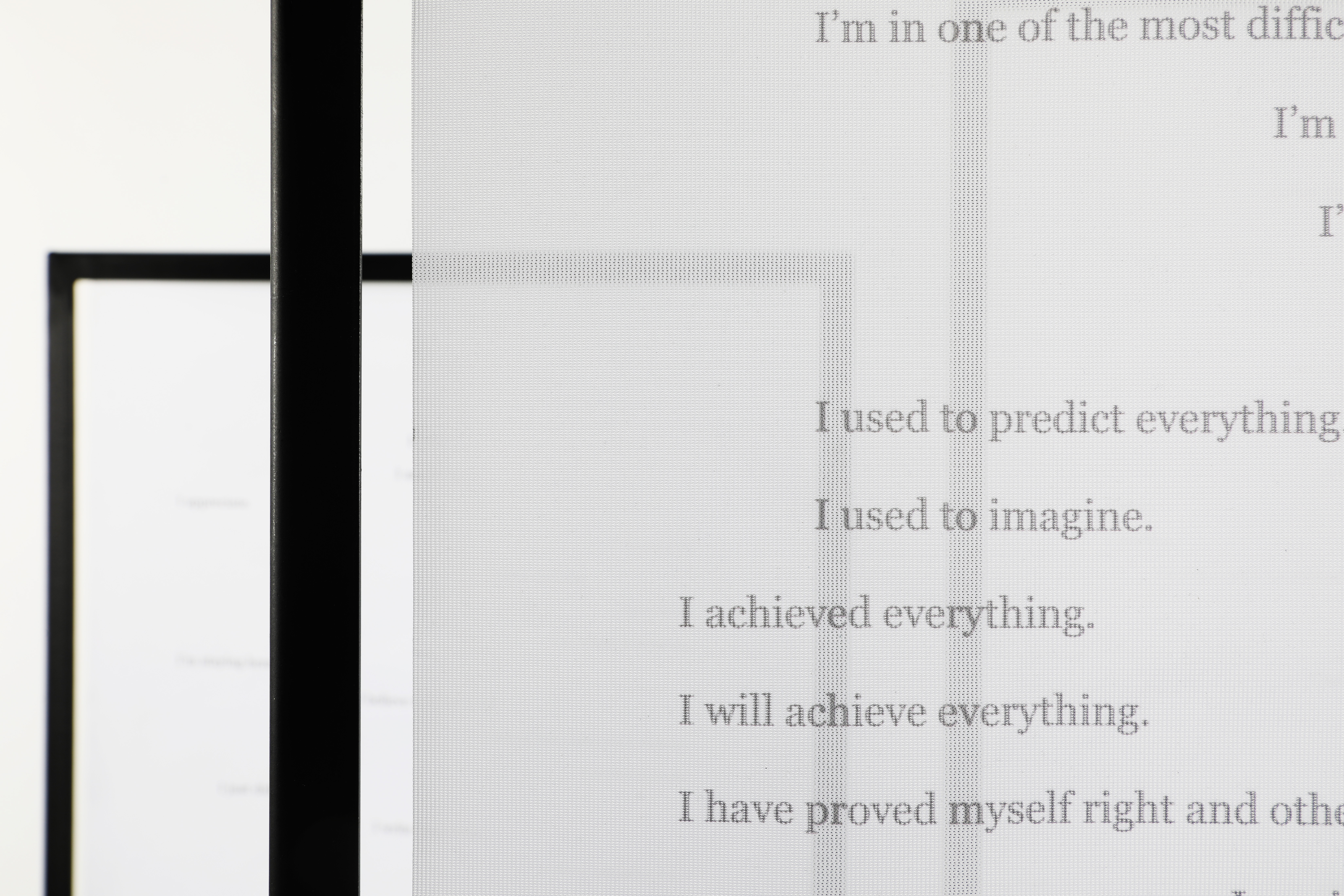
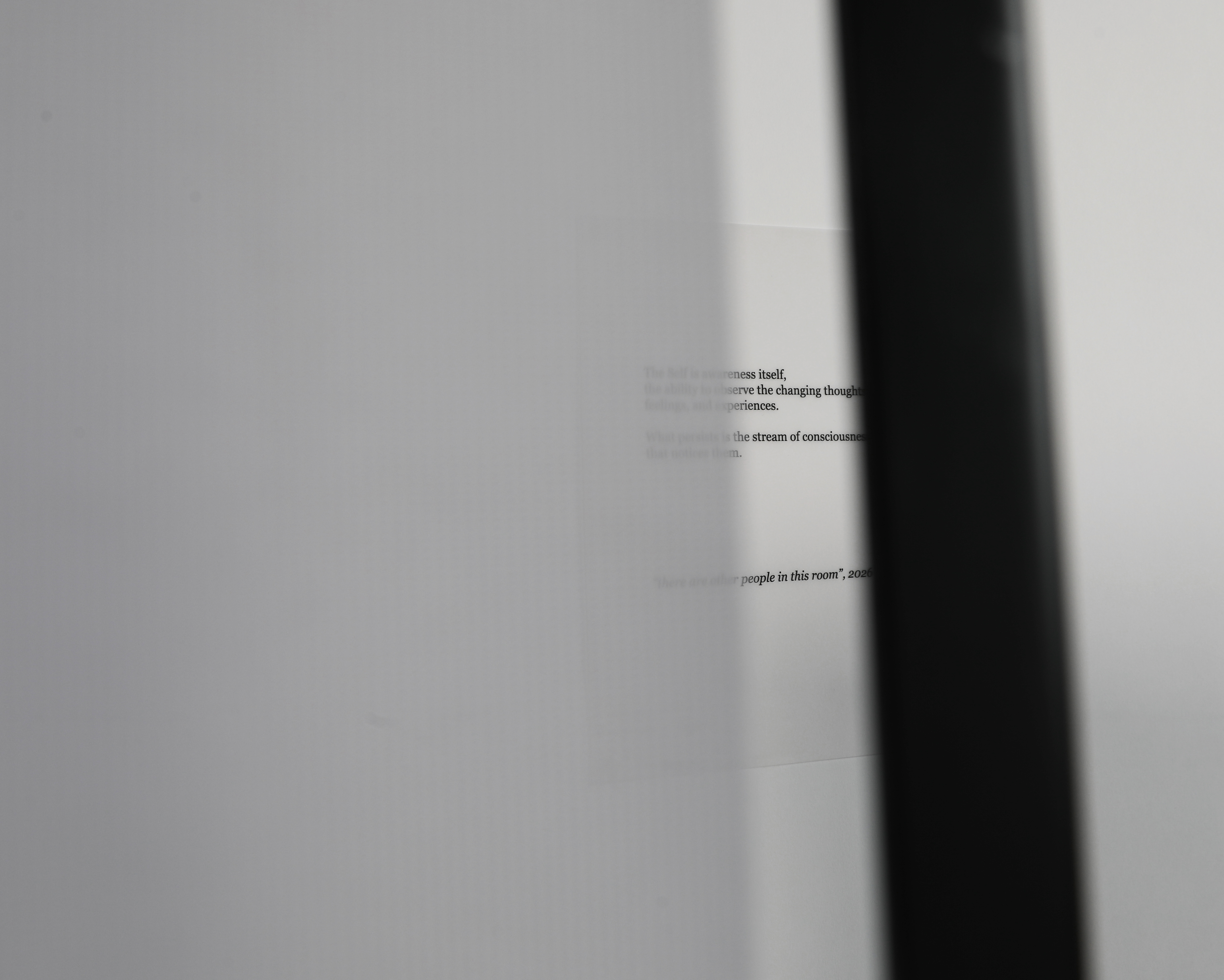
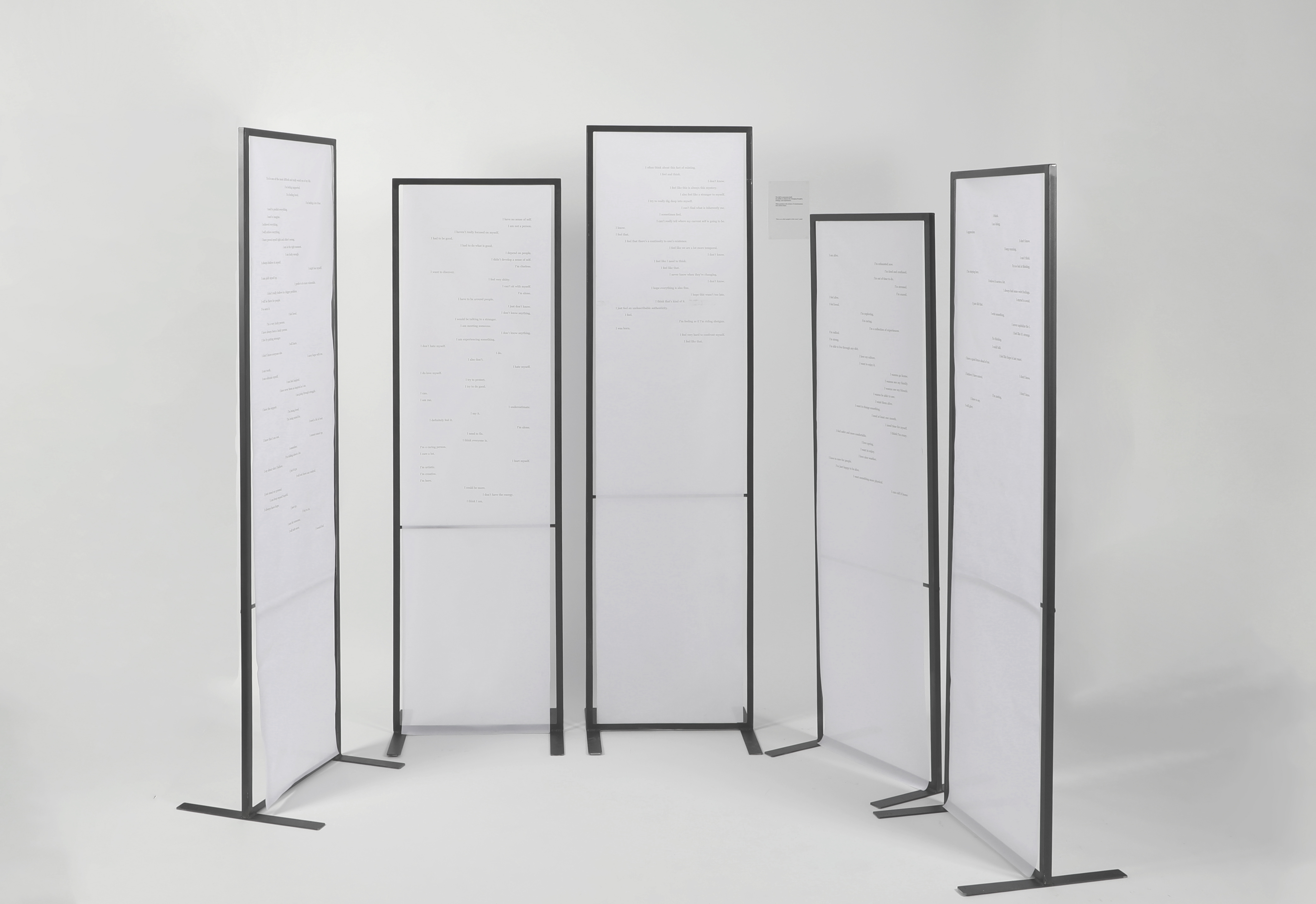
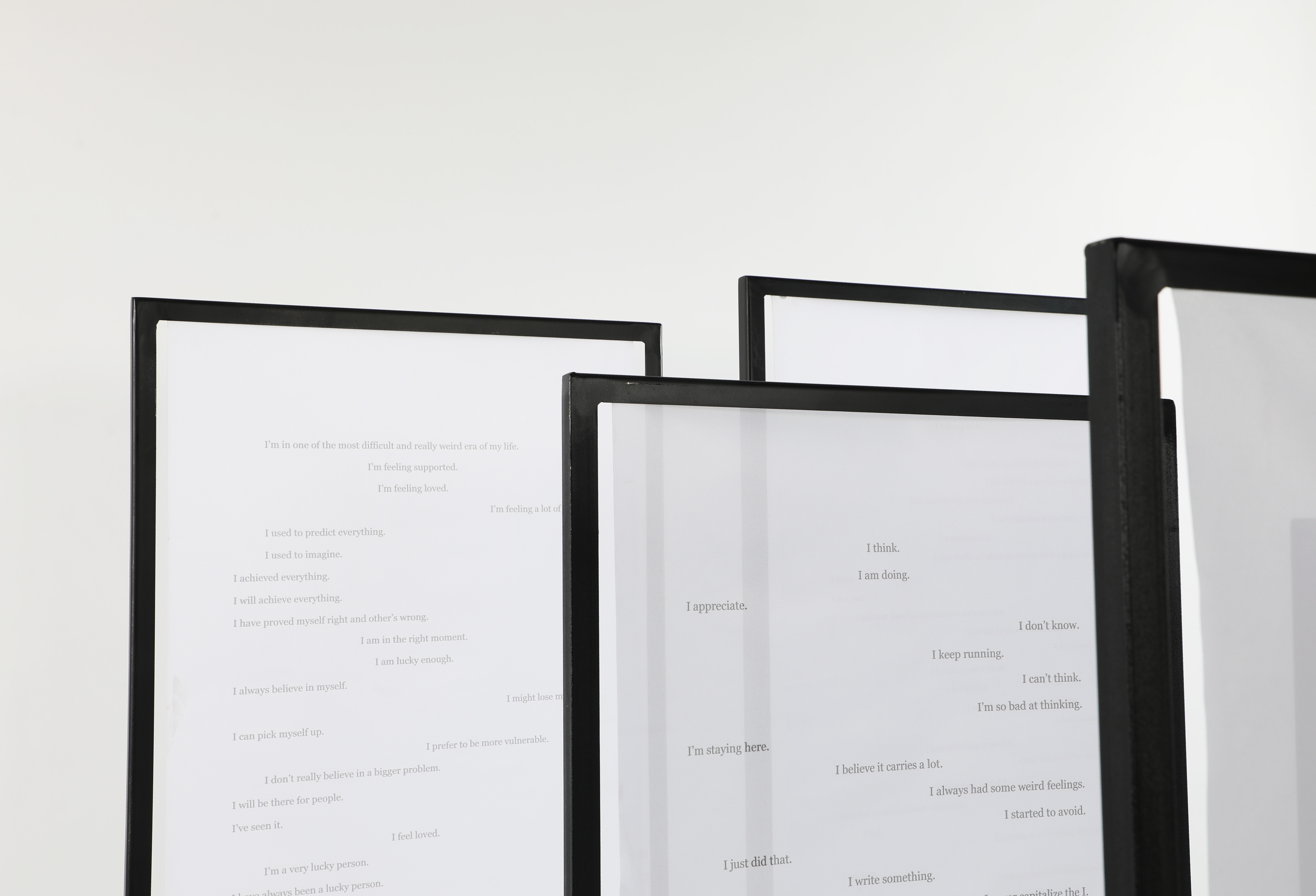
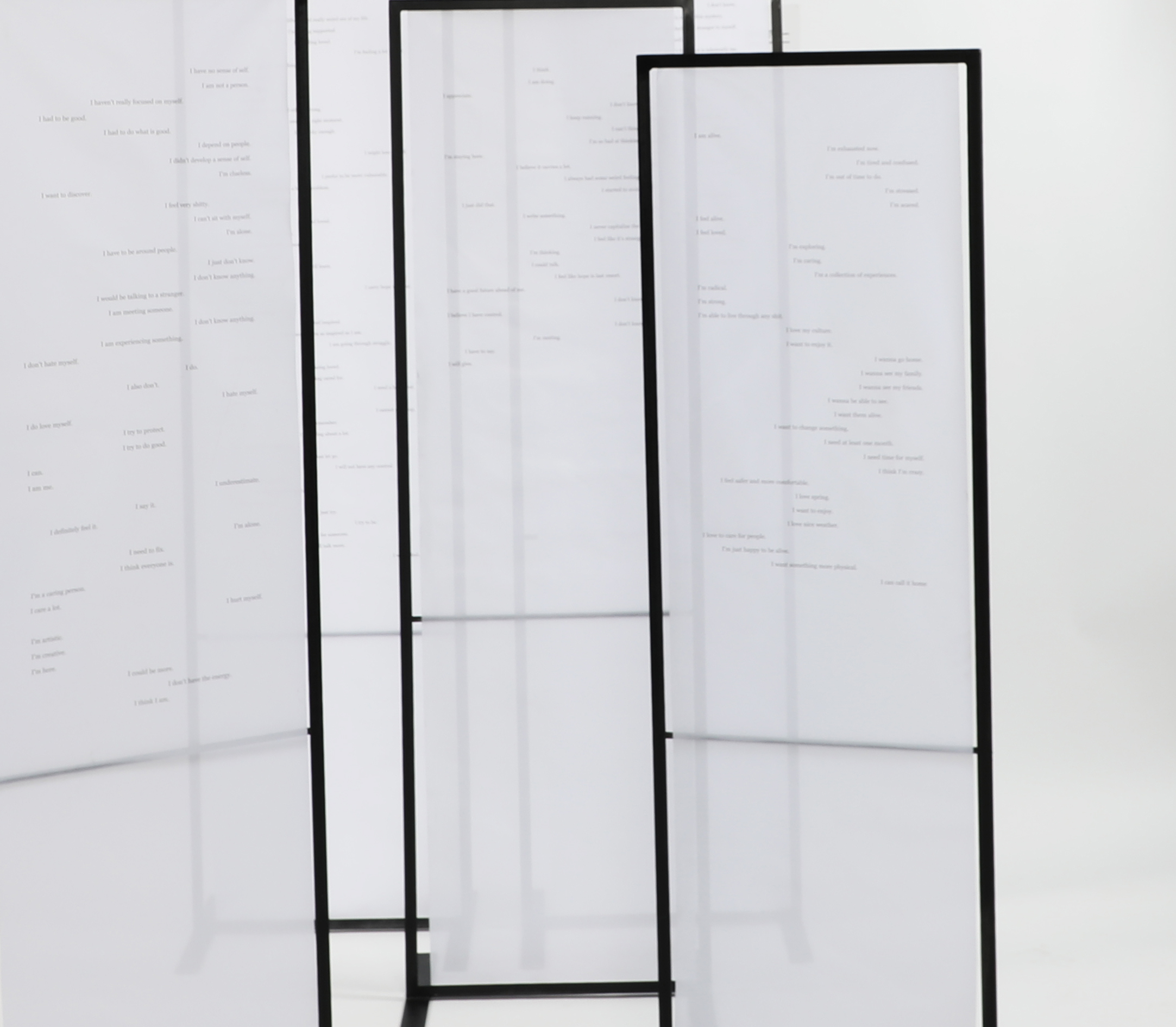
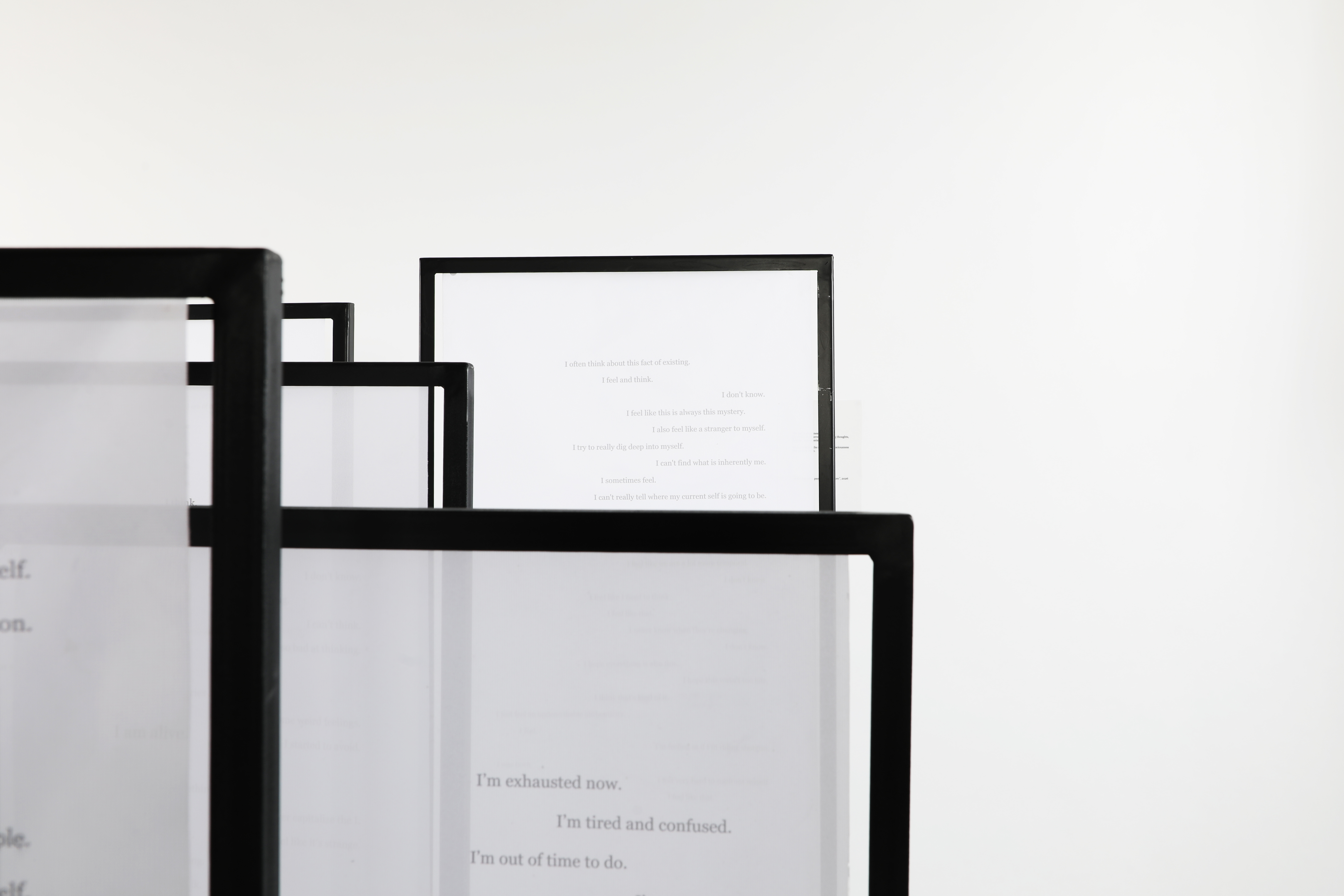
Printed on fabric, bespoke steel frames
Typeface: Georgia
Frame production: Kasra Mehravar
Special thanks: Rolf Schoeber
Printed: ArtEZ Univercity of the Arts, Arnhem
there are other people in this room, 2026
Installation is the outcome of a year-long investigation into the nature of the self and self-representation. Through research in philosophy, literature, and linguistics, the project explores language as a medium capable of revealing aspects of identity that usually stay behind performance and appearance.
Through recorded conversations, participants were invited to speak freely - about their memories, fears, desires, reflections, or everyday experiences. These recordings were transcribed and carefully edited into textual portraits, capturing moments of self-awareness and authenticity.
The portraits are creating a space that visitors can walk through and experience from within. Rather than just observing the work, the audience becomes part of the installation, encountering all those different voices. While each portrait represents an individual, together they showcase shared emotions, thoughts, and experiences. The ability to relate is this connection that exist between people. In a time focused so much on the individual, I want to invite reflection on what we have in common.